Pylon vs Monument Signs - Which Is Right for Your Business?
Clear sightlines are essential. Before finalizing a sign install, it is important to view the location from multiple angles and distances. This helps ensure that the sign remains visible under different conditions and at different times of day. A sign that looks perfect from one perspective may be partially hidden from another.
Aligning Sign Placement With Brand Goals

Table of Contents
- Introduction
- What Is a Pylon Sign?
- What Is a Monument Sign?
- Key Differences Between Pylon and Monument Signs
- Visibility and Location Considerations
- Local Zoning and Permitting in Wisconsin
- Lighting Options for Monument Signs
- Maintenance and Long-Term Considerations
- Which Sign Type Fits Different Business Settings?
- Conclusion
- Summary: Book a Discovery Call
- Frequently Asked Questions
Key Takeaways
- Pylon signs are tall, pole-mounted structures built for high visibility from a distance, while monument signs are low to the ground and tend to blend into landscaping.
- Local zoning codes in Wisconsin municipalities often dictate sign height, setback, and illumination rules, which can limit which option is even available to you.
- A lighted monument sign in Wisconsin can extend visibility into evening hours, but it typically involves more upfront planning around electrical work and permitting.
- Monument signs generally suit businesses with strong curb presence or those located in business parks with shared aesthetic requirements.
- Pylon signs tend to suit businesses near highways or busy roads where visibility from far away matters more than ground-level appearance.
Introduction
The choice between a pylon sign and a monument sign comes down to your location, your local zoning rules, and how visible your business needs to be from a distance versus up close. Both sign types serve the same basic purpose, helping customers find you, but they do it in different ways and come with different costs and regulations attached. For business owners across Wisconsin, this decision often gets made too quickly, without much thought given to setback requirements or how the sign will read at night.
This matters because a sign is a long-term investment. Once it's installed, it's not something most businesses replace every few years. Understanding the practical differences ahead of time can save you from picking a sign type that doesn't actually work for your property or your local code requirements.
What Is a Pylon Sign?
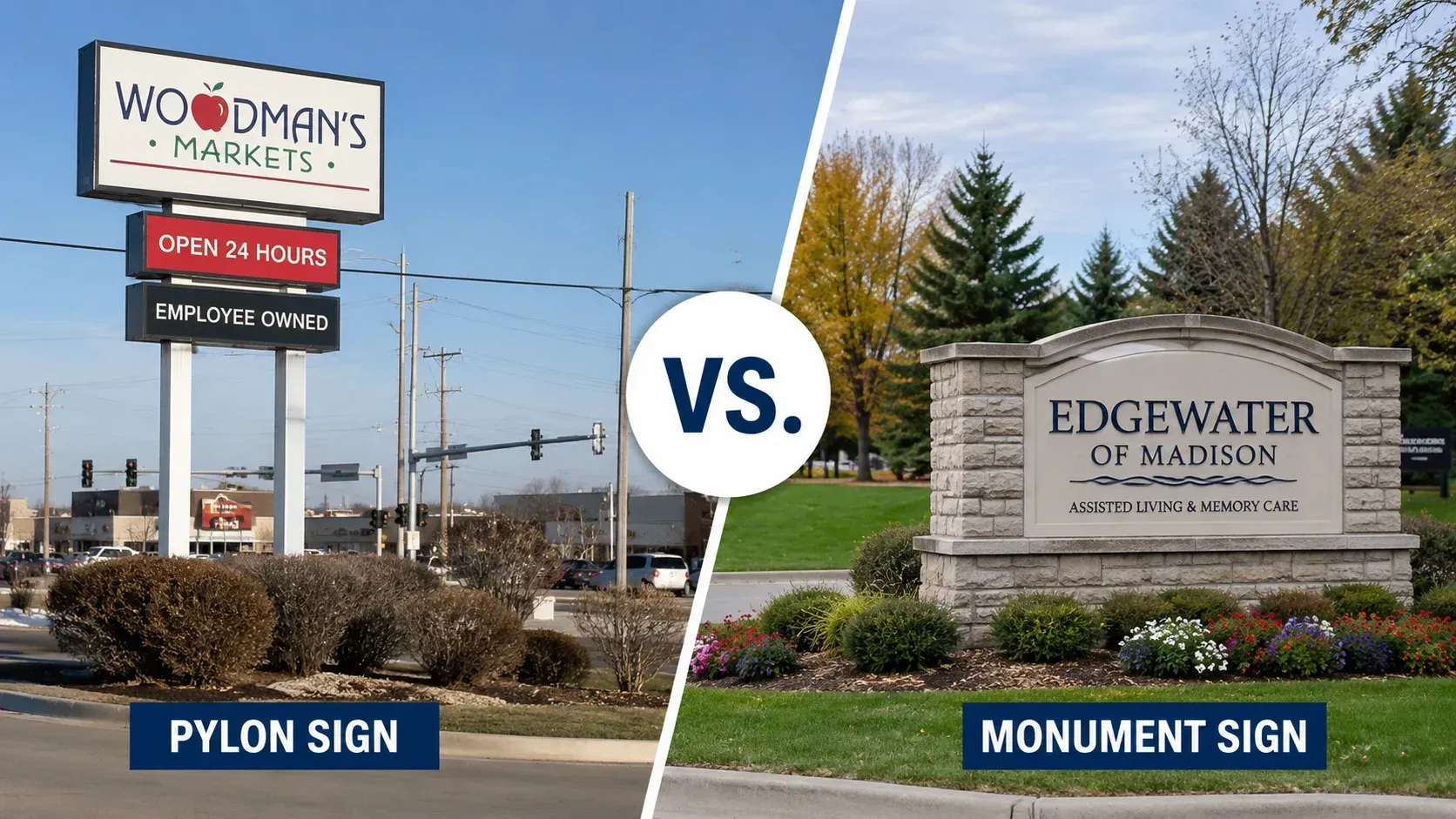
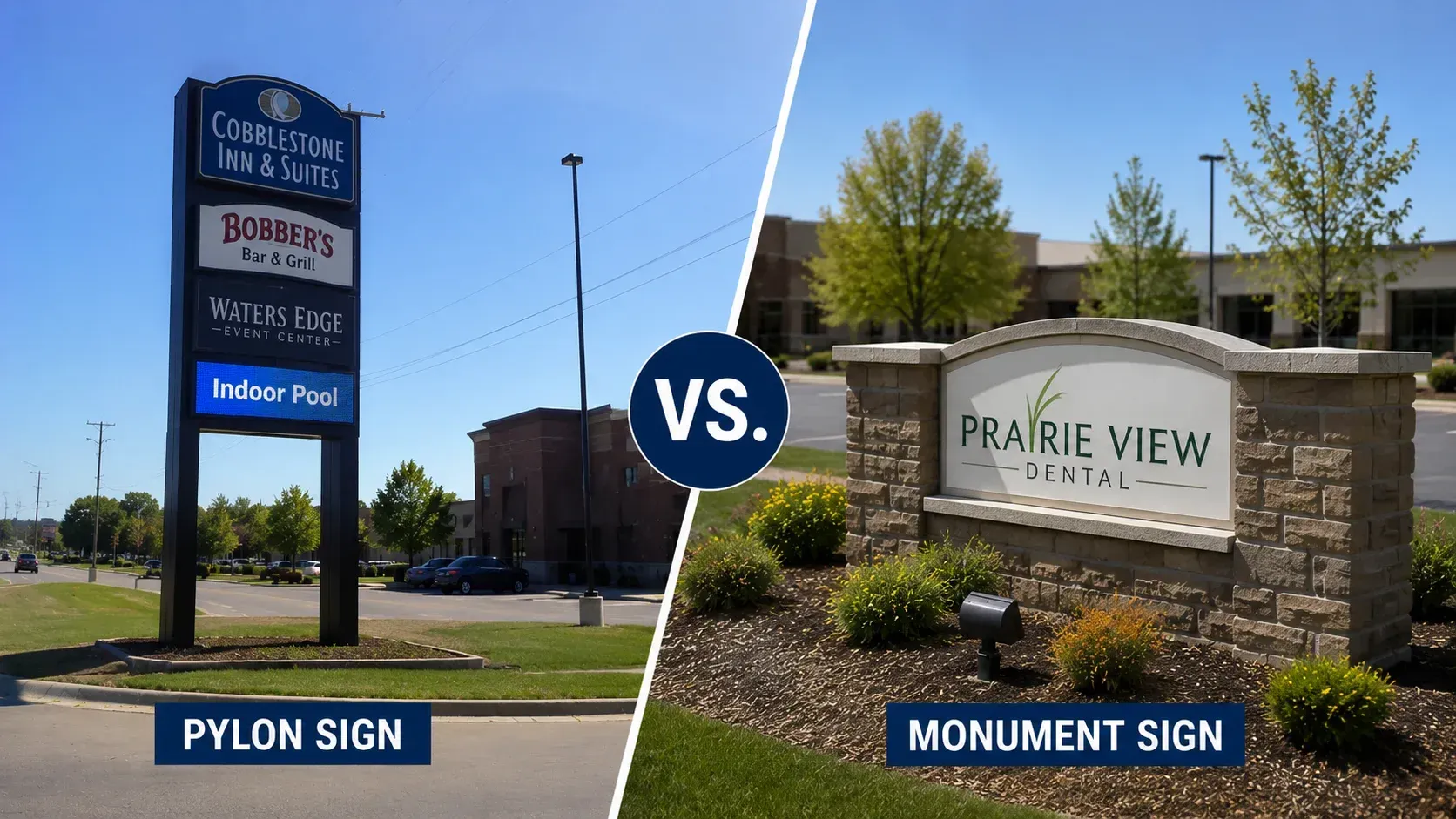
A pylon sign is a freestanding sign mounted on one or more poles, raised well above ground level. These signs are designed to be seen from far away, often by drivers moving at higher speeds on highways or major roads.
Because they sit higher up, pylon signs can rise above trees, other buildings, or nearby signage that might otherwise block a driver's view. Many gas stations, hotels, and shopping centers near highway exits use pylon signs for this reason.
Pylon signs are typically larger and taller than monument signs, which means they often involve more structural engineering. Wind load, foundation depth, and pole height all factor into how a pylon sign is built.
What Is a Monument Sign?
A monument sign is a freestanding sign built low to the ground, usually with a solid base made of brick, stone, stucco, or metal. Instead of rising above the landscape, it sits within it.
This lower profile makes monument signs a common choice for office parks, medical buildings, schools, apartment complexes, and businesses set back from the road on landscaped property. They tend to read as more permanent and architectural compared to a pole-mounted sign.
Monument signs can include illuminated lettering, backlit panels, or external lighting fixtures, depending on the design and the property's electrical setup. A lighted monument sign in Wisconsin can help maintain visibility once the sun goes down, particularly during the shorter daylight hours of fall and winter.
Key Differences Between Pylon and Monument Signs
The most obvious difference is height. Pylon signs are built to be seen from a distance, often dozens of feet away or more, while monument signs are meant to be read at closer range, usually within a few hundred feet.
Cost is another factor that varies based on size, materials, and site conditions rather than sign type alone. A simple monument sign can sometimes cost less than an elaborate pylon sign, but a large illuminated pylon structure can also cost more than a basic monument design. There's no fixed rule that one category is automatically cheaper than the other.
Footprint and land use also differ. Pylon signs need less ground space since most of the structure is vertical, while monument signs require a wider base and sometimes landscaping around them to look intentional rather than out of place.
Visibility and Location Considerations
If your business sits along a highway, near a busy intersection, or in an area with a lot of competing signage, distance visibility becomes a bigger priority. A pylon sign's height can help it stand out above nearby buildings or trees.
If your business is set back from the road, located in a business park, or near a residential area, a monument sign might fit the surrounding environment better. Many municipalities prefer monument signs in these settings specifically because they're less visually intrusive.
It's also worth considering traffic speed near your property. Drivers moving at higher speeds need more time to process and react to signage, which is part of why pylon signs are common near highways.

Local Zoning and Permitting in Wisconsin
Wisconsin municipalities each set their own sign codes, and these codes can vary significantly from one city or village to the next. Height limits, setback requirements, square footage caps, and illumination rules are usually defined at the local level, not the state level.
Some municipalities restrict pylon sign height to a set number of feet, particularly in areas without major highway access. Others have specific design guidelines for monument signs, including required materials or landscaping around the base.
Before deciding on a sign type, it's worth checking with your local zoning or planning department. A sign that's allowed in one Wisconsin town might not meet code in another, even if the two locations seem similar.
Permits and Site Surveys
Most sign installations, regardless of type, require a permit from the local municipality. This process typically includes a review of the sign's size, placement, and sometimes its electrical components if it will be illuminated.
A site survey before installation can help identify underground utilities, property line setbacks, and any existing restrictions tied to the property itself. Skipping this step can lead to delays or required changes after a sign has already been ordered.
Lighting Options for Monument Signs
Monument signs can be illuminated in a few different ways. Internally lit panels use light from within the sign structure, while externally lit signs use fixtures positioned to shine onto the sign's face.
LED lighting has become a common choice for monument signs due to its lower energy use compared to older fluorescent or incandescent options. A lighted monument sign in Wisconsin needs to account for the electrical work required, which usually means coordinating with a licensed electrician as part of the installation process.
Not every monument sign needs to be illuminated. Some businesses choose non-illuminated monument signs, particularly if local code restricts lighting or if the property already has adequate lighting nearby, such as parking lot fixtures.
Maintenance and Long-Term Considerations
Both sign types require periodic maintenance, though the specifics differ. Pylon signs, due to their height and exposure, may need more frequent structural inspections to check for wind damage or loosening hardware over time.
Monument signs, being closer to the ground, are generally easier to access for cleaning, repainting, or repairing damaged panels. However, their base materials, like brick or stucco, can show wear from moisture, freeze-thaw cycles, or landscaping equipment over the years.
Illuminated signs of either type need occasional checks on wiring, bulbs or LEDs, and power supplies. Dim or flickering lights are usually one of the first signs that a component needs attention.
Which Sign Type Fits Different Business Settings?
There isn't a universal answer, since the right choice depends on the property, the surrounding area, and local rules. That said, a few general patterns tend to hold across different business types.
Businesses near highways, large parking lots, or high-speed roads often lean toward pylon signs because of the distance visibility they offer. Businesses in office parks, medical campuses, or areas with strict design standards more often use monument signs to match the surrounding architecture.
Some properties aren't eligible for one type or the other due to local zoning, which can make the decision more straightforward than expected once you understand what's actually permitted.
Conclusion
Choosing between a pylon sign and a monument sign isn't about which one is better in a general sense, it's about which one fits your property, your local zoning requirements, and how customers actually approach your business. Pylon signs offer distance visibility for high-traffic, high-speed locations, while monument signs offer a grounded, architectural presence suited to set-back properties and planned developments.
Local Wisconsin zoning codes play a significant role in this decision, often more than personal preference. Understanding what's allowed on your property before settling on a sign type can prevent unnecessary delays or design changes later in the process.
Summary: Book a Discovery Call
If you're still weighing the differences between a pylon sign and a monument sign for your Wisconsin property, a short conversation can help clarify what's realistic for your site and local code. This isn't about being sold on one option over the other, it's simply a chance to ask questions and get a clearer picture before making a decision. Reaching out for a no-pressure discovery call can be a useful next step if you want more specific guidance based on your property and location.

Frequently Asked Questions
Are monument signs always cheaper than pylon signs?
Not necessarily. Cost depends on size, materials, lighting, and site conditions rather than the sign category alone. A simple monument sign may cost less than an elaborate one, and the same applies to pylon signs.
Do I need a permit to install a monument sign in Wisconsin?
Most municipalities require a permit for freestanding signs, including monument signs, especially if the sign will be illuminated. Requirements vary by city or village, so checking with your local zoning department is recommended.
Can a monument sign be illuminated at night?
Yes, monument signs can include internal or external lighting. A lighted monument sign in Wisconsin typically requires coordination with an electrician during installation to meet local electrical and zoning requirements.
Why are pylon signs taller than monument signs?
Pylon signs are designed for visibility at a distance, often for drivers on highways or busy roads. Their height helps them stand out above buildings, trees, or other signage that could block a driver's line of sight.
Does Wisconsin have statewide sign height limits?
Sign regulations in Wisconsin are generally set at the municipal level rather than statewide, meaning height limits, setbacks, and other rules can differ from one city or village to the next.
Can I switch from a pylon sign to a monument sign later?
This depends on your property's zoning classification and any existing permits tied to your current sign. Some properties may not be eligible for a different sign type without additional review.
How do I know which sign type is allowed on my property?
Checking with your local municipal zoning or planning department is the most reliable way to confirm what's permitted, since rules can vary based on property type, location, and surrounding land use.