September 8, 2026

What's the Difference Between Front-Lit and Halo-Lit Channel Letters?

Since 1983 Residential and Commercial Family and Locally Owned Since 1983 Residential and Commercial Family and Locally Owned

Share this article

Clear sightlines are essential. Before finalizing a sign install, it is important to view the location from multiple angles and distances. This helps ensure that the sign remains visible under different conditions and at different times of day. A sign that looks perfect from one perspective may be partially hidden from another.

Aligning Sign Placement With Brand Goals

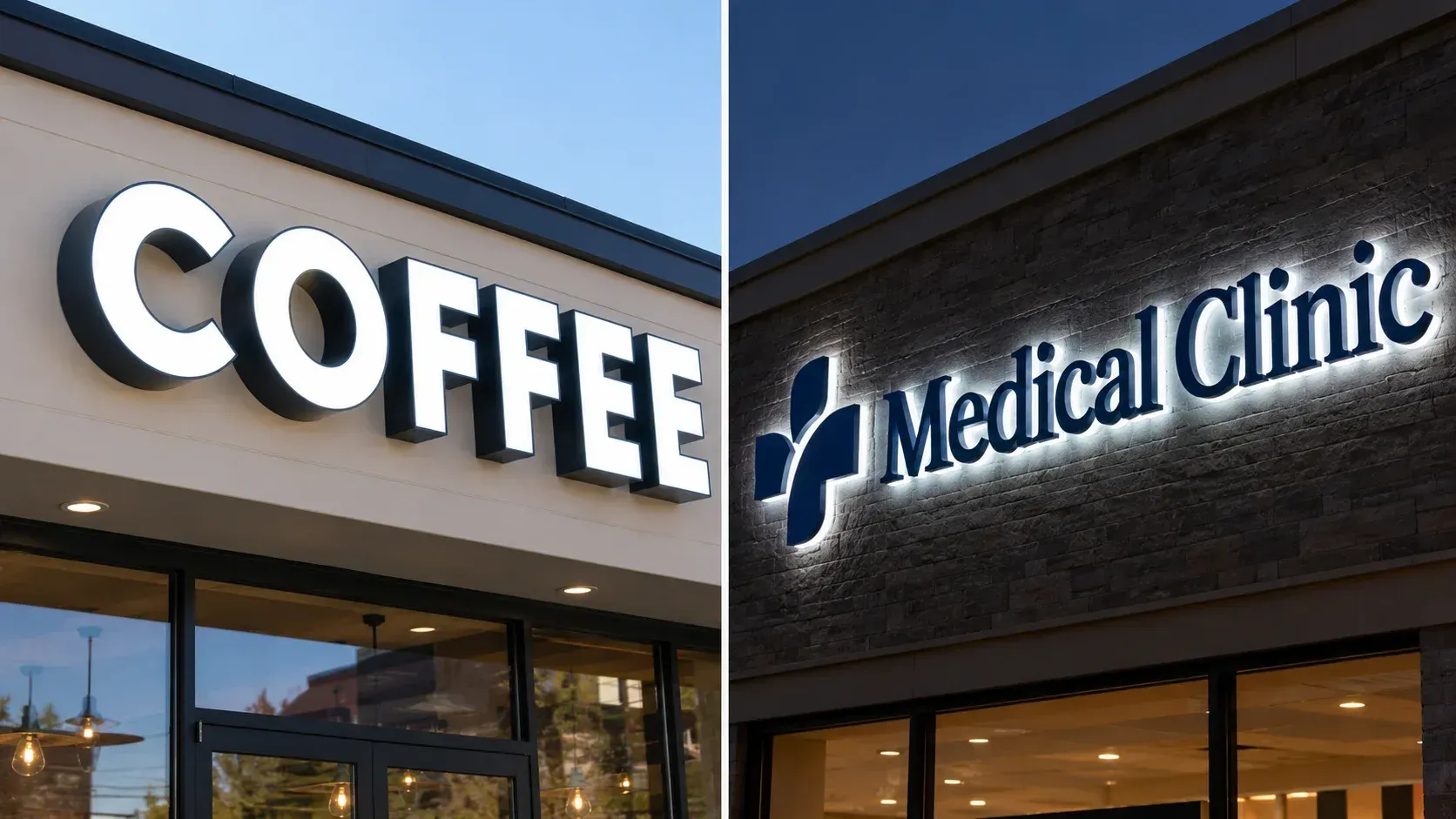
Front-Lit vs Halo-Lit Channel Letters comparison showing a bright front-lit coffee sign and an illuminated halo-lit medical clinic sign for an article on


Key Takeaways

  • Front-lit channel letters glow through the face of each letter, while halo-lit letters send light backward to create a soft glow on the wall behind them.
  • Front-lit signs tend to read better from a distance and in bright daylight, which suits busy roadsides and storefronts set back from traffic.
  • Halo-lit signs offer a softer, more upscale look but depend heavily on wall color and mounting distance to show the halo effect well.
  • Halo-lit letters often cost more to build and install because of the metal faces, spacers, and careful mounting they require.
  • The right choice usually comes down to your building, your viewing distance, your brand look, and your budget rather than one option being better overall.


Table of Contents

  1. Front-Lit vs Halo-Lit: The Short Answer
  2. What Are Channel Letters?
  3. How Front-Lit Channel Letters Work
  4. How Halo-Lit Channel Letters Work
  5. Side-by-Side Comparison
  6. How to Decide Between the Two
  7. Common Misunderstandings
  8. A Realistic Example
  9. What Typical Advice Overlooks
  10. Conclusion
  11. Ask About Channel Letter Signs in Madison, WI
  12. Frequently Asked Questions

Front-Lit vs Halo-Lit: The Short Answer

Front-lit channel letters glow from the front, with light shining out through a translucent face on each letter. Halo-lit channel letters do the opposite, sending light backward against the wall so a soft glow outlines the shape of each letter. If you are comparing channel letter signs for a storefront, knowing how these two styles differ is one of the first decisions worth getting right.


That single difference in lighting direction changes how the sign looks, how well it reads at a distance, how it gets mounted, and often what it costs. For a business owner weighing options, understanding both styles up front helps you match the sign to your building and your brand.


The choice matters because a sign is a long-term fixture. Once it is fabricated and mounted, changing the lighting style later usually means rebuilding the letters, so the decision is worth thinking through early.


What Are Channel Letters?

Channel letters are individual three-dimensional letters, each built as its own small enclosure. Every letter has a face, sides (called returns), and a back, and most hold LED lighting inside.


You see them on retail shops, restaurants, offices, and service businesses throughout Madison. They are popular because they look clean, professional, and can be lit for visibility after dark.


Both front-lit and halo-lit signs fall under the broader category of illuminated signs. The lighting direction is what separates the two styles, along with the materials used for the letter faces.


How Front-Lit Channel Letters Work

Direct answer: Front-lit channel letters have a translucent acrylic face with LEDs mounted inside. The light shines forward through the face, so the letters themselves appear to glow.


This is the most common style you will notice on commercial buildings. The face is usually colored acrylic that matches the brand, and the returns are often painted aluminum.


Front-lit letters are known for strong readability. Because the face glows, the letters stay legible from a distance and hold up well against bright surroundings, including sunny days and busy, well-lit streets.


They also tend to be more forgiving about placement. Since the light comes from the face and not the wall, the color and texture of the building behind the sign matters less than it does with halo lighting.


The trade-off is the look. Front-lit signs read as bold and direct, which fits many businesses but may feel less refined than a softer glow for brands going for an upscale image.


How Halo-Lit Channel Letters Work

Direct answer: Halo-lit channel letters, also called reverse channel letters, have solid opaque faces with LEDs mounted on the back. The light points at the wall, creating a glowing halo around each letter's outline.


Instead of the letter face lighting up, the wall behind it does. The letters are mounted a short distance off the surface using spacers or standoffs, which leaves room for the light to spread.


The faces are usually metal, often aluminum, which gives the letters a crisp, solid appearance during the day. At night, the halo effect creates a soft, dimensional look that many brands find elegant.


This style depends heavily on its surroundings. A light-colored, smooth wall reflects the halo cleanly, while a dark or textured wall can dull or hide the effect. Mounting distance also affects how tight or wide the glow appears.


Halo-lit signs generally carry a higher price. The metal faces, precise mounting, and extra fabrication steps add labor and materials compared to a standard front-lit build.


Side-by-Side Comparison

The table below outlines how the two styles tend to compare. Actual results depend on your specific building, design, and materials.
Factor Front-Lit Halo-Lit
Light direction Forward, through the face Backward, onto the wall
Face material Translucent acrylic Opaque metal (often aluminum)
Nighttime look Bright, bold, direct Soft glow, dimensional
Daytime readability Strong Strong (solid faces)
Distance readability Generally better Good, but softer
Wall color impact Low High
Mounting Flush to wall Spaced off the wall
Typical cost Lower Higher
Common fit High-traffic storefronts Upscale or brand-focused looks

Neither column is the "right" answer on its own. The best fit depends on how and where the sign will be seen.


How to Decide Between the Two

There is no universal winner, so a simple framework helps. Working through these points with a sign professional can narrow the choice.


  1. Viewing distance. For signs seen from far away or from a fast-moving road, front-lit letters usually read more clearly.
  2. Wall surface and color. Halo lighting needs a light, smooth wall to show well. A dark or rough surface favors front-lit.
  3. Brand look. A bold, high-visibility look leans front-lit. A softer, premium feel leans halo-lit.
  4. Budget. Front-lit is often more cost-effective. Halo-lit adds cost for the finish and mounting.
  5. Lighting conditions. In areas with a lot of competing light at night, the brighter front-lit face may cut through better.


Some businesses even combine both styles in a single sign, lighting the face and the halo together. That option costs more but offers the strongest visual presence.


Common Misunderstandings

Common belief: Halo-lit letters are always the higher-end, better choice. What is actually true: Halo-lit signs look refined in the right setting, but on a dark or textured wall the halo can barely show. The "better" option depends on the wall and the viewing conditions, not the style alone.


Common belief: Front-lit signs look cheap. What is actually true: Front-lit letters can look clean and professional with quality materials and good design. Readability is a real advantage, not a downgrade.


Common belief: Any wall works for halo lighting. What is actually true: Wall color, texture, and mounting distance all shape the halo. A poor surface can waste the effect you paid for, which is why the wall is worth checking before you commit.


A Realistic Example

Consider a hypothetical bakery moving into a Madison storefront with a light gray brick front, set close to a busy sidewalk. The owner wants a warm, inviting look and expects most customers to notice the sign up close or from across the street.


In this case, halo-lit letters could suit the goal. The smooth, light-toned wall would carry the glow, the short viewing distance would show the effect well, and the softer look would match the brand feel.


Now picture a different business, an auto shop set back from a four-lane road with a dark metal building. Here, front-lit letters would likely make more sense. The greater distance, the darker wall, and the need for strong visibility all point toward a bright, face-lit sign.


The same product line, two different buildings, two different recommendations. That is why the surrounding conditions drive the decision more than personal preference alone.


What Typical Advice Overlooks

Most short comparisons stop at "front-lit is brighter, halo-lit is fancier." A few practical points get left out, and they can affect your experience with the sign for years.


  • Permits and codes. Sign size, brightness, and placement can be regulated locally. Confirming requirements before fabrication helps avoid costly rework. The U.S. Small Business Administration offers general guidance on local permits and licenses that can point you toward the right city offices.
  • Winter and weather. Wisconsin sees snow, ice, and temperature swings. Mounting quality and sealing matter for signs that face the elements year-round.
  • Maintenance access. LEDs last a long time but not forever. Both styles eventually need service, so factor in how the sign will be reached for repairs. Ongoing sign maintenance keeps a sign looking its best over time.
  • Installation quality. A halo-lit sign in particular relies on precise, even mounting to look right. Professional sign installation plays a real role in the final result.
  • Long-term cost. The upfront price is only part of the picture. Energy use, repairs, and the sign's lifespan all factor into the true cost of ownership.


None of these should scare you off either style. They are simply worth weighing alongside the look and the sticker price.


Conclusion

The core difference between front-lit and halo-lit channel letters comes down to which way the light travels. Front-lit letters glow from the face for bold, direct readability, while halo-lit letters glow from behind for a softer, more dimensional look.


Neither style is better in every case. Front-lit tends to win on distance and daylight visibility, while halo-lit shines on the right wall for a premium feel, usually at a higher cost.


Your building, your viewing distance, your brand look, and your budget together point toward the better fit. Taking time to weigh those factors leads to a sign you will be satisfied with for years.


Ask About Channel Letter Signs in Madison, WI

If you are still deciding between front-lit and halo-lit channel letters for your Madison, WI business, a short conversation can help you sort through the options. You can contact us to share your building details, ask about materials, and get a clearer sense of what fits your space and budget.


There is no pressure and no obligation. The goal is simply to give you the information you need to make an informed choice. Browsing a project sign gallery can also help you picture how each style looks in real settings.

Frequently Asked Questions

  • 1. Which is brighter, front-lit or halo-lit channel letters?

    Front-lit letters generally appear brighter because the light shines directly out through the face. Halo-lit letters produce a softer glow on the wall, which reads as more subtle rather than bright.

  • 2. Do halo-lit letters work on any wall color?

    No. Halo-lit letters show best on light, smooth walls that reflect the glow. Dark or heavily textured surfaces can dull or hide the halo effect, so the wall is worth checking first.

  • 3. Are halo-lit channel letters more expensive?

    Usually, yes. The opaque metal faces, spacers, and precise mounting add materials and labor compared to a standard front-lit build, which tends to raise the overall cost.

  • 4. Can I combine front-lit and halo-lit in one sign?

    Yes. Some signs light both the face and the halo for maximum presence. This combination costs more but offers a strong, layered look for brands that want it.

  • 5. Which style is better for a business set far from the road?

    Front-lit letters are often the better fit for signs viewed from a distance or a fast road, since the glowing face stays legible farther away than a softer halo.


Recent Posts

Vinyl vs. Mesh Banners: Which Should You Choose? Vinyl
September 8, 2026
Compare vinyl and mesh banners, including wind, durability, print quality, and cost, so you can pick the best banner material for outdoor use in Madison, WI.
A worker unrolls a summer festival banner, demonstrating how much custom event banners cost.
August 17, 2026
Learn what affects custom banner cost in Madison, WI, including banner size, material, printing, and finishing, so you can plan the right banner for your event.
Technician installs NORTHSIDE sign, showing how much channel letter signs cost in Madison, WI
August 17, 2026
Learn what affects channel letter sign cost in Madison, WI, including sign size, materials, lighting, and installation, so you can plan your storefront sign.
Professionals reviewing custom sign to choose a sign company for your business.
July 8, 2026
Looking for a sign company in Wisconsin? Learn what to look for, from licensing to design experience, before hiring a local signage business for your project.
Graphic comparing Pylon vs Monument Signs for business storefronts.
July 8, 2026
Comparing pylon and monument signs for your Wisconsin business? Learn the key differences in cost, visibility, and local zoning rules before making a decision.
Certified Service storefront with blue neon sign above glass garage doors at dusk
May 4, 2026
Learn how proper sign placement improves visibility, readability, and customer awareness while maximizing the impact of your business signage. Learn more!
Neon orange “RESTAURANT” sign on a building exterior
April 2, 2026
This guide outlines the steps involved in an effective sign installation and highlights key considerations for businesses investing in high-impact signage.
Pink “entrance” sign on a lime green wall with a right-pointing arrow
February 17, 2026
Effective sign installation helps businesses attract attention and improve visibility. Learn how proper placement supports customer engagement. Learn more!
A lit bar and grill storefront at night with red trim and parked cars in front.
October 8, 2025
A well-designed business sign improves brand recognition and attracts customers. Learn why quality signage supports long-term business growth. Learn more!
Hanging coffee shop sign with steaming cup illustration and the word “Coffee” in pink script
February 13, 2025
Learn three important questions to ask a sign service company before choosing a contractor for installation, maintenance, or repairs. Learn more today!
Show More