October 22, 2026

Do Illuminated Signs Need a Special Electrical Permit in Wisconsin?

Since 1983 Residential and Commercial Family and Locally Owned Since 1983 Residential and Commercial Family and Locally Owned

Share this article

Clear sightlines are essential. Before finalizing a sign install, it is important to view the location from multiple angles and distances. This helps ensure that the sign remains visible under different conditions and at different times of day. A sign that looks perfect from one perspective may be partially hidden from another.

Aligning Sign Placement With Brand Goals

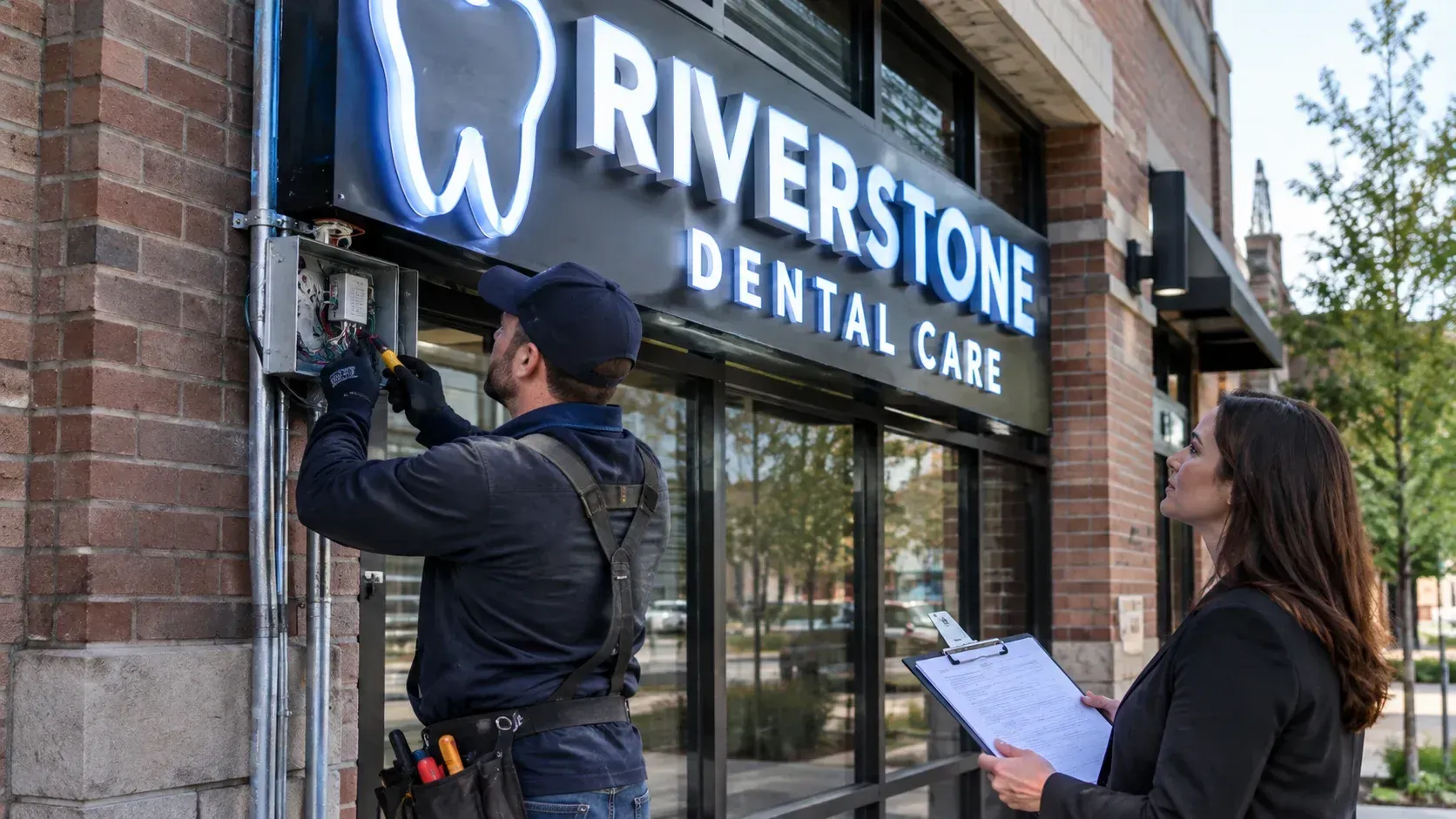
A professional electrician working on the electrical wiring and power supply of an illuminated commercial sign for Riverstone Dental Care, with a project manager reviewing the installation.


Table of Contents

  1. Introduction
  2. An Illuminated Sign Permit Usually Means Two Approvals
  3. What the Sign Permit Covers and What It Leaves Out
  4. Why the Electrical Permit for Signs Is Separate
  5. Who Is Allowed to Do the Electrical Work
  6. How Wisconsin Sign Permit Authority Is Split
  7. Refacing and LED Retrofits Can Still Trigger Review
  8. Conclusion
  9. We Handle All Your Permitting
  10. Frequently Asked Questions


Key Takeaways

  • Usually yes. A lighted sign normally needs an electrical permit in addition to the sign permit.
  • The two permits answer different questions and often come from different offices.
  • The sign permit is about size, height, placement, and brightness. The electrical permit is about the wiring and the connection.
  • Electrical work on a commercial sign is licensed work, and the permit is typically tied to the licensed electrician doing it.
  • Swapping a lighted face or converting a cabinet to LED can trigger review even though the sign looks unchanged from the street.

Introduction

Yes, an illuminated sign in Wisconsin usually requires an electrical permit in addition to the sign permit, and those are two separate approvals rather than one form with a lighting checkbox. People are frequently surprised by this, because from the sidewalk a lighted sign is just a sign. To the people reviewing it, the cabinet and the circuit feeding it are two different subjects with two different sets of rules.


Getting the illuminated sign permit sequence straight early matters more than it sounds like it should. A project can clear zoning review cleanly and then stall because nobody pulled the electrical side, or because the wiring was run by someone who could not pull it.


An Illuminated Sign Permit Usually Means Two Approvals

Most lighted commercial signs in Wisconsin involve a sign or zoning permit plus an electrical permit, and sometimes a building permit as well.

Approval What it is really asking Who typically issues it
Sign or zoning permit Is this sign allowed here, at this size, height, and brightness? Your city or village
Electrical permit Is the wiring and connection safe and code compliant? The municipality or the state, depending on the community
Building permit Does the structure or mounting need review? Your city or village

The practical effect is that approvals can move at different speeds and come back with different questions. A sign can be approved as a sign while the electrical side is still open. Treating the two as one task is how schedules slip.


What the Sign Permit Covers and What It Leaves Out

The sign permit is a land use decision, not a safety inspection, and it stops at the cabinet.


What it generally addresses:

  • Whether a lighted sign is permitted in that zoning district at all
  • Size, height, and setback from the right of way
  • How many signs the property is allowed
  • Illumination limits, which can cover brightness, hours of operation, and whether the sign may change message or animate
  • Design review, in certain districts and corridors


What it does not address: how power gets to the sign, what the circuit looks like, where the disconnect goes, or whether the installation meets electrical code. That is the other permit, and no amount of zoning approval substitutes for it.


Brightness is where the two sides nearly touch. A zoning ordinance may cap illumination levels or require dimming after hours, which is a lighting control question answered in the sign permit even though the hardware that does it is on the electrical side. If a local code restricts changeable copy or animation, that decision belongs here too.


Why the Electrical Permit for Signs Is Separate

The electrical permit exists because a sign is a permanently connected piece of equipment outdoors, and the review is about the power feed rather than the appearance.


The electrical permit for signs generally concerns:

  • The circuit serving the sign and how it is run
  • Grounding and bonding
  • A disconnecting means, so the sign can be de-energized safely for service
  • Weatherproofing of outdoor connections
  • Whether the sign and its components are listed and labeled for the use
  • Inspection of the finished work


That last line is the one people forget. An electrical permit normally comes with an inspection, which means the work has to be left accessible at the right moment rather than closed up and painted over. Scheduling around the inspection is part of the job.


A sign cabinet carrying a listing mark from a recognized testing laboratory makes this conversation shorter, because the fixture itself has already been evaluated. A shop built cabinet with no listing invites a longer one.


Who Is Allowed to Do the Electrical Work

Electrical work on a commercial sign is licensed work in Wisconsin, and the permit is normally tied to the licensed electrical contractor performing it rather than to the property owner.


What that means in practice:

  • The connection is made by a licensed electrician. Sign fabrication, structural mounting, and electrical connection are different trades, and the last one is the regulated one.
  • The permit usually follows the license. The electrician pulling it is the party the inspector holds responsible.
  • Property owners generally cannot self permit commercial electrical work the way a homeowner sometimes can at a residence.
  • Coordination matters more than it seems. The sign company, the electrician, and the general contractor all have to be working from the same drawing, or the stub out ends up in the wrong place.


We coordinate the permitting and the installation, including pre installation surveys, and we work with the licensed electrical trade on the connection rather than presenting ourselves as the electrician. When someone tells you they will handle every piece of this themselves, ask who specifically is pulling the electrical permit and under whose license. The answer should be immediate.


How Wisconsin Sign Permit Authority Is Split

The Wisconsin sign permit picture is split between local and state authority, and which applies depends on your municipality.


The general shape:

  • Zoning and sign ordinances are local. Madison, Middleton, Sun Prairie, Fitchburg, Verona and every other city and village write and administer their own. Our companion article covers whether a monument sign needs a permit in Dane County and why the county is the wrong unit to ask about.
  • Electrical code is statewide, administered by the Wisconsin Department of Safety and Professional Services.
  • Electrical permitting and inspection may be delegated. Some municipalities handle it themselves, others go through the state or a contracted inspection agency.
  • Unincorporated areas follow county zoning for the sign side while the electrical side still runs through the state framework.


So the honest answer to "who do I call" is that it depends on your address, and the two calls may go to two different places. Confirm the electrical permitting path with your municipality or with DSPS before assuming it matches the last project you did in another town.


Refacing and LED Retrofits Can Still Trigger Review

A sign that looks unchanged from the street can still require permits, which is where most unpleasant surprises happen.

Situations that commonly trigger review even though nobody is installing a new sign:

What you are doing Why it can still need a permit
Refacing an existing cabinet Some ordinances treat a new face as a new sign
Converting fluorescent or neon to LED New components, new power supplies, new wiring
Adding illumination to an unlit sign The sign becomes a lighted sign, which may be regulated differently
Relocating a sign on the same property Placement is what the sign permit approved
Replacing a failed transformer or power supply Electrical work, with the usual licensing question attached

The LED retrofit is the one worth flagging. It is usually a good decision on energy and maintenance grounds, and it still changes the electrical interior of the sign. Treating it as a lamp swap is a mistake. Ask about the illuminated sign permit requirements first, because retroactive permitting costs more than permitting in advance, and an unpermitted alteration can complicate a future sale or lease.


Conclusion

A lighted sign in Wisconsin normally needs two approvals rather than one: a local sign permit governing whether the sign is allowed at that size and brightness, and an electrical permit governing the wiring, the disconnect, and the connection, pulled under a licensed electrician. The authority for the first is your city or village, and the second may be local or run through the state. Refaces and LED conversions are part of this, not exceptions to it. Sorting out both tracks before fabrication starts is the difference between a scheduled install and a sign sitting in a shop waiting on paperwork.


We Handle All Your Permitting

If you are planning an illuminated sign in Madison, Middleton, Sun Prairie, Fitchburg, Verona, or the surrounding communities, we manage the permit process as part of the project and coordinate the trades so the approvals and the install line up. Capital City Signs has been family owned in Madison since 1983, and illuminated signs and lighted cabinet work are a core part of what we build. Call (608) 222-1881 or tell us what the sign needs to do and we will sort out which permits apply before anything gets fabricated.

Frequently Asked Questions

  • Do illuminated signs need an electrical permit in Wisconsin?

    Usually yes. A lighted sign typically needs an electrical permit covering the circuit, grounding, disconnect, and connection, in addition to the local sign or zoning permit. Confirm the specific path with your municipality, since electrical permitting is handled locally in some communities and through the state in others.

  • Is the electrical permit separate from the sign permit?

    Yes, they are separate approvals answering different questions. The sign permit decides whether the sign is allowed at that size, height, and brightness. The electrical permit covers the wiring and connection and normally includes an inspection of the finished work.

  • Who pulls the electrical permit for a sign?

    Normally the licensed electrical contractor doing the work, since commercial sign wiring is licensed work and the permit follows the license. Property owners generally cannot self permit commercial electrical work the way a homeowner sometimes can at a residence.

  • Does refacing an existing lighted sign need a permit?

    It can. Some ordinances treat a new face as a new sign, and converting the interior to LED involves new power supplies and wiring. Ask your municipality before treating a reface or retrofit as routine maintenance.

  • Does Capital City Signs handle sign permitting?

    Yes. We manage the permit process as part of the project, including pre installation surveys and obtaining proper permits, and we coordinate with the licensed electrical trade on the connection side.


Recent Posts

Professionals reviewing site plans next to a business park monument sign in Dane County.
October 22, 2026
Learn when a monument sign permit is required in Dane County, what affects sign permit rules, and the monument sign requirements property owners should check.
Vinyl vs. Mesh Banners: Which Should You Choose? Vinyl
September 8, 2026
Compare vinyl and mesh banners, including wind, durability, print quality, and cost, so you can pick the best banner material for outdoor use in Madison, WI.
Front-Lit vs Halo-Lit channel letters comparison: bright coffee sign vs halo clinic sign.
September 8, 2026
Learn the difference between front-lit and halo-lit channel letters, including how each is built, lit, and priced, to help choose the right sign in Madison, WI.
A worker unrolls a summer festival banner, demonstrating how much custom event banners cost.
August 17, 2026
Learn what affects custom banner cost in Madison, WI, including banner size, material, printing, and finishing, so you can plan the right banner for your event.
Technician installs NORTHSIDE sign, showing how much channel letter signs cost in Madison, WI
August 17, 2026
Learn what affects channel letter sign cost in Madison, WI, including sign size, materials, lighting, and installation, so you can plan your storefront sign.
Professionals reviewing custom sign to choose a sign company for your business.
July 8, 2026
Looking for a sign company in Wisconsin? Learn what to look for, from licensing to design experience, before hiring a local signage business for your project.
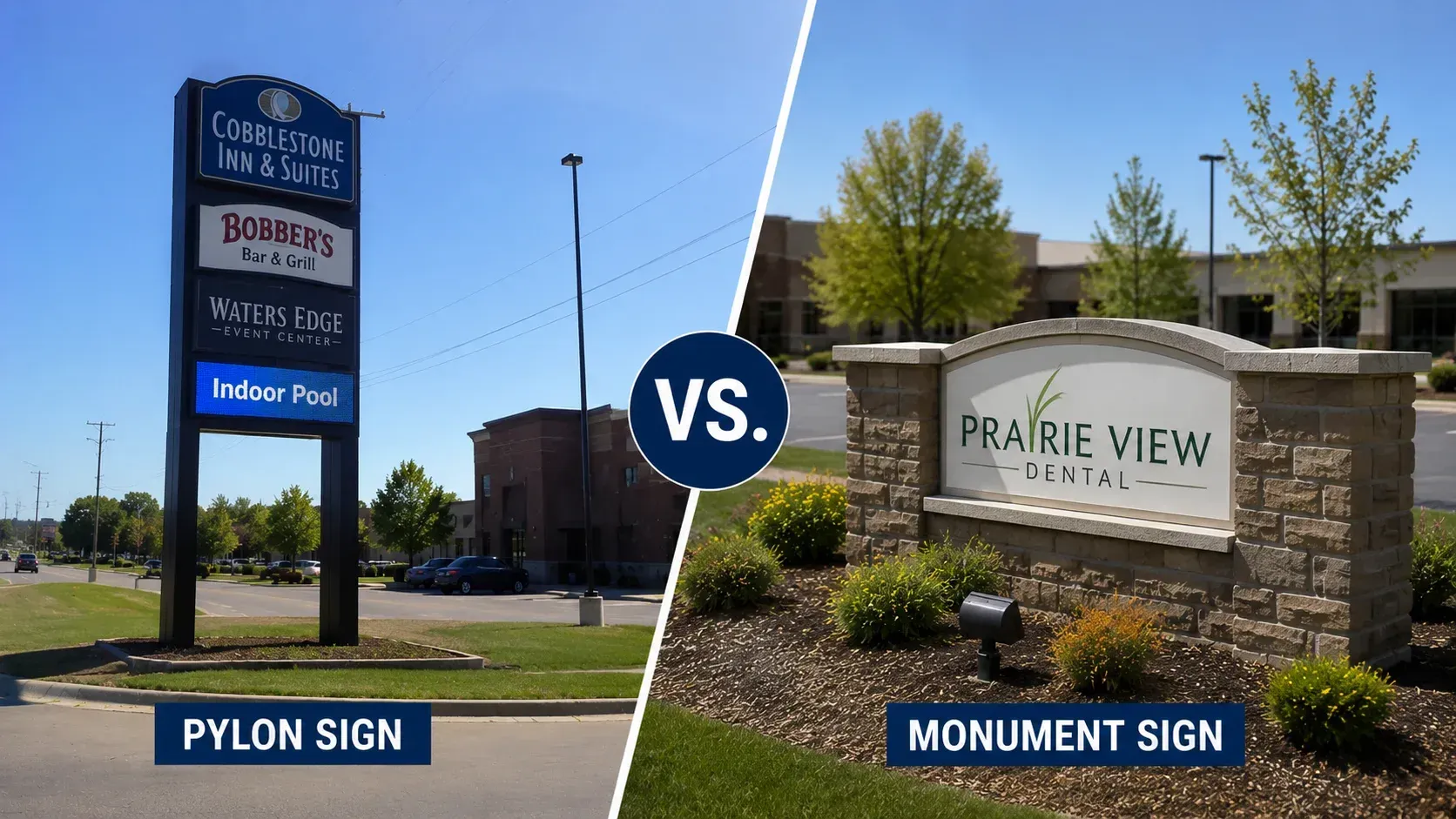
Graphic comparing Pylon vs Monument Signs for business storefronts.
July 8, 2026
Comparing pylon and monument signs for your Wisconsin business? Learn the key differences in cost, visibility, and local zoning rules before making a decision.
Certified Service storefront with blue neon sign above glass garage doors at dusk
May 4, 2026
Learn how proper sign placement improves visibility, readability, and customer awareness while maximizing the impact of your business signage. Learn more!
Neon orange “RESTAURANT” sign on a building exterior
April 2, 2026
This guide outlines the steps involved in an effective sign installation and highlights key considerations for businesses investing in high-impact signage.
Pink “entrance” sign on a lime green wall with a right-pointing arrow
February 17, 2026
Effective sign installation helps businesses attract attention and improve visibility. Learn how proper placement supports customer engagement. Learn more!
Show More