Does a Monument Sign Need a Permit in Dane County?
Clear sightlines are essential. Before finalizing a sign install, it is important to view the location from multiple angles and distances. This helps ensure that the sign remains visible under different conditions and at different times of day. A sign that looks perfect from one perspective may be partially hidden from another.
Aligning Sign Placement With Brand Goals

Table of Contents
- Introduction
- Who Issues a Monument Sign Permit in Dane County
- What a Monument Sign Permit Application Usually Needs
- Monument Sign Requirements That Vary by Municipality
- Why the Foundation Is Part of the Permit Conversation
- More Than One Sign Permit May Apply
- How Much Time Permitting Actually Adds
- Conclusion
- Let Us Handle Your Permitting
- Frequently Asked Questions
Key Takeaways
- Yes. A monument sign requires a permit in essentially every Dane County municipality.
- Dane County itself is the wrong unit to ask about. Madison, Middleton, Sun Prairie, Fitchburg, Verona and the rest each administer their own sign code.
- Height, square footage, setback, landscaping, and illumination rules all differ between those codes.
- The foundation is part of the review, because a monument sign is a structure in the ground rather than something hung on a wall.
- The permit is rarely the slow part. Design review, a variance, or a landlord approval usually is.
Introduction
Yes, a monument sign requires a permit in essentially every Dane County municipality, and the application is usually a zoning or sign permit issued by the city or village rather than by the county. The important correction is in that sentence: Dane County is the wrong unit to ask about if your property sits inside an incorporated city or village, because each one administers its own sign ordinance.
That is why a straight answer to "what are the rules in Dane County" does not exist, and why anyone giving you one has not looked at your address. Monument signs in Madison, Middleton, Sun Prairie, Janesville, Monroe, McFarland, and Cottage Grove all require permits, and the requirements behind those permits are not the same document.
Who Issues a Monument Sign Permit in Dane County
The authority depends on where the property sits, and there are three cases.
- Inside an incorporated city or village. Madison, Middleton, Sun Prairie, Fitchburg, Verona, Monona, Waunakee, Stoughton, Oregon, McFarland, DeForest, and Cottage Grove each issue their own sign permits under their own ordinances.
- In an unincorporated town. Dane County zoning generally applies, administered at the county level.
- On a state highway frontage. State requirements may apply on top of the local permit, depending on the road.
So the first question is not what the rules are. It is which desk you are standing at. A business owner a mile down the road from you may be working from an entirely different ordinance with different numbers in it.
If a landlord, property management company, or business park association is involved, their approval is a separate gate again, and one that has nothing to do with the municipality.
What a Monument Sign Permit Application Usually Needs
Most Dane County municipalities ask for a similar package, even though the standards inside it differ.
Typically required:
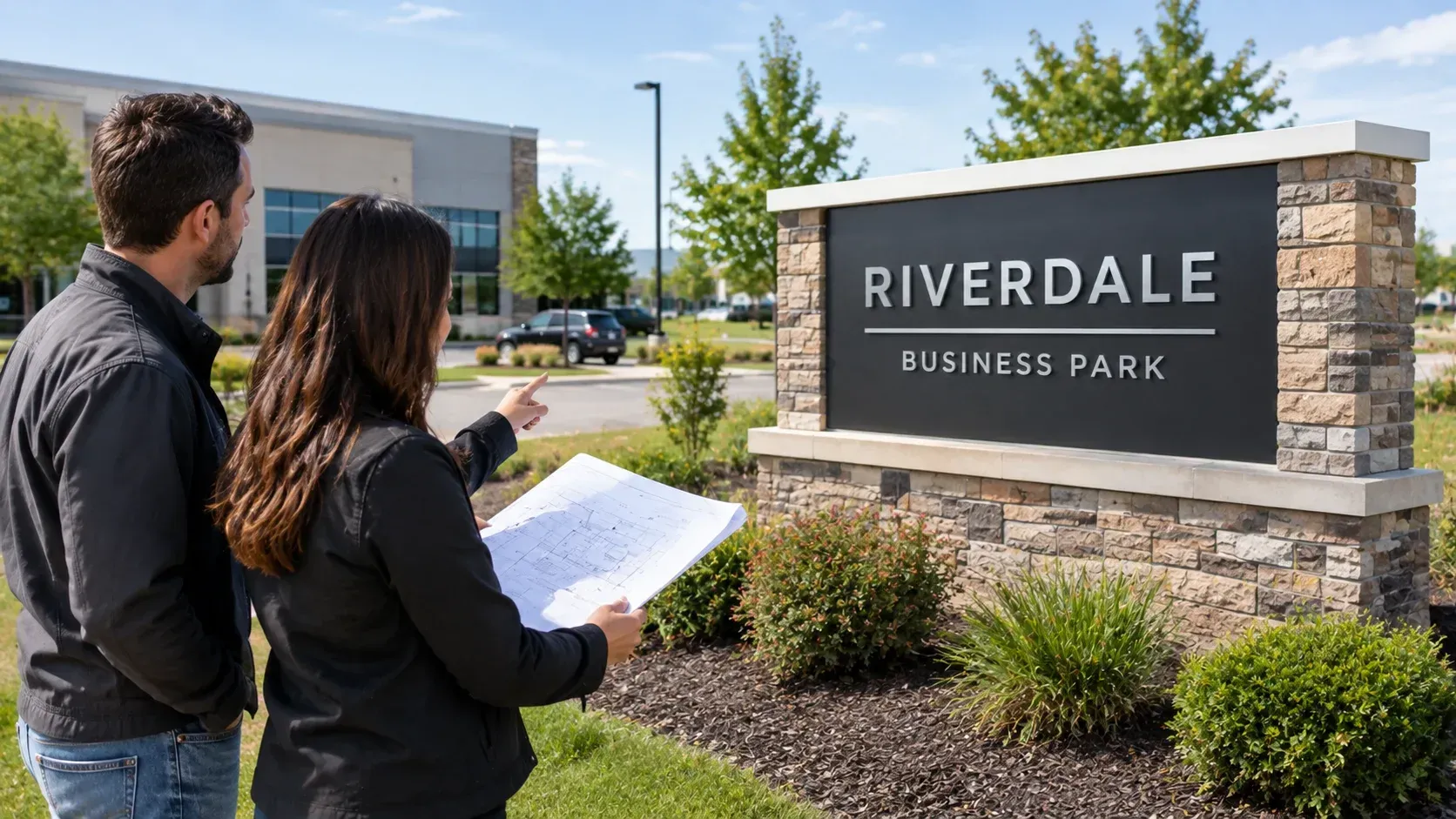
- A site plan showing the sign location, distances to property lines and the right of way, and nearby driveways
- A scaled drawing or elevation with overall dimensions, sign face area, materials, and colors
- Structural and foundation detail, sometimes requiring an engineer's stamp depending on size
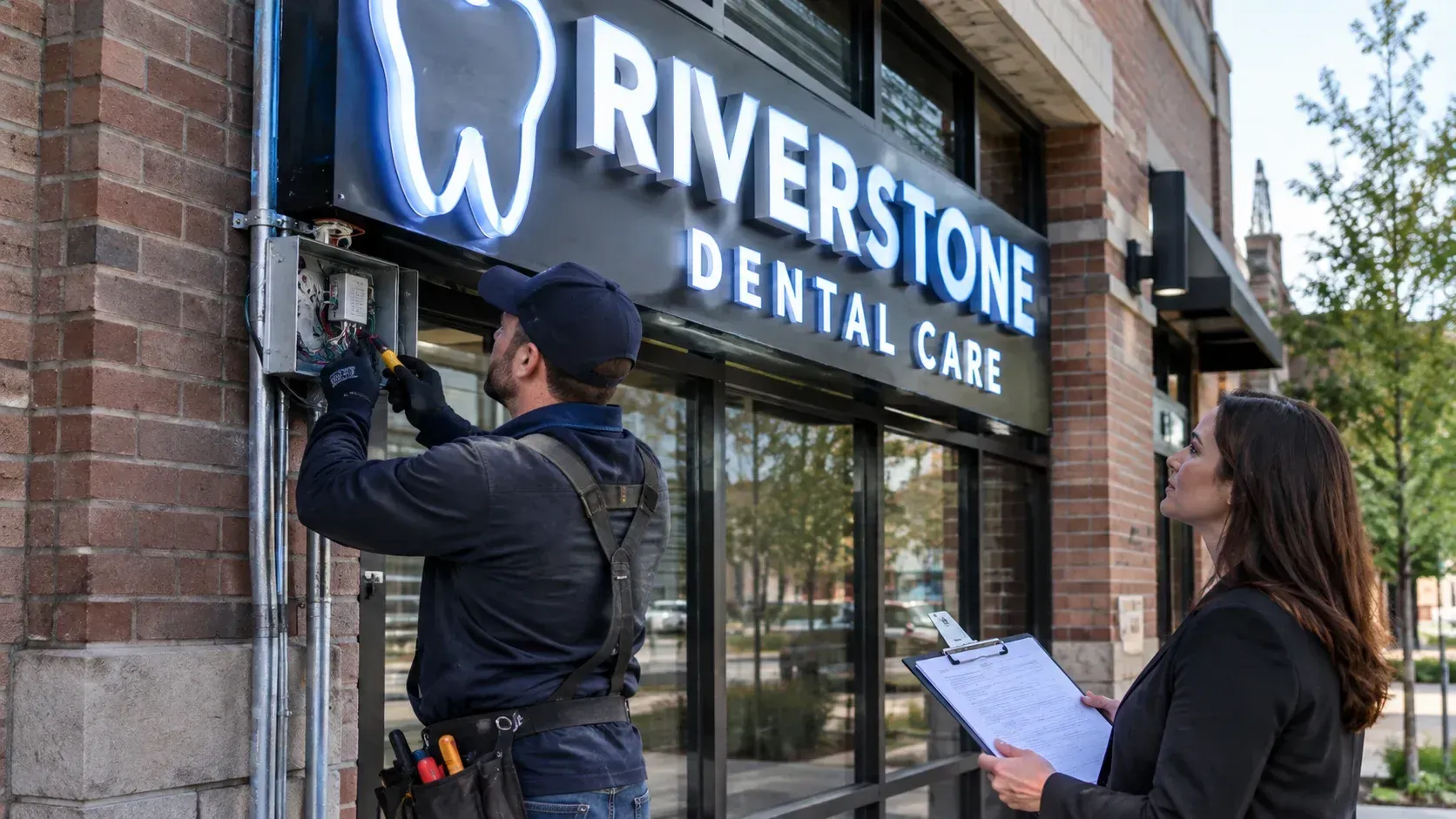
- Illumination details, if the sign is lighted, including the type and how it is controlled
- Landscaping around the base, which several local codes require
- Property owner authorization, separate from the business tenant's signature
- Contractor information for whoever is installing it
None of that is unusual, and all of it takes longer to assemble than people expect. This is the part of the project we handle as a matter of course, and it is why permitting sits as its own step in our monument sign process rather than as an afterthought.
Monument Sign Requirements That Vary by Municipality
This is where the differences bite, and it is the reason we will not publish numbers in this article.
Sign codes have specific requirements for monument sign height, square footage, and setback distances, and those specifics change at every municipal line. What varies in practice:
| Requirement | Why it differs locally |
|---|---|
| Maximum height | Set by each ordinance, often by zoning district |
| Maximum sign face area | Sometimes scaled to street frontage or building size |
| Setback from the right of way | Driven by local vision-clearance and road standards |
| Landscaping at the base | Required in some codes, optional in others |
| Illumination limits | Brightness, hours, and whether changeable copy is allowed |
| Number of signs allowed per lot | Monument plus wall signage may be counted together |
| Design review | Required in some districts and corridors, not others |
Any specific figure you read online is from somebody else's ordinance. Confirm yours with the municipality, or let us confirm it as part of the design.
One practical consequence: a design that was approved for your other location may not be approvable here. We would rather catch that at the rendering stage than after fabrication.
Why the Foundation Is Part of the Permit Conversation
A monument sign is a structure in the ground, not a sign on a wall, and reviewers treat it that way.
What that means for the application:
- Footings must extend below the frost line to prevent heaving through Wisconsin freeze-thaw cycles, which is a structural question the reviewer cares about.
- Soil and site conditions affect footing design, which is why a site evaluation happens before drawings are final.
- Utility locates have to be called in before any digging, through Wisconsin's 811 service, Diggers Hotline.
- Easements can make an otherwise perfect location unusable, and they rarely show up until someone pulls the plat.
- Larger signs may need an engineer's stamp, depending on the municipality and the size.
Easements are the one that most often forces a redesign. A sign placed in a utility easement can be required to come out at the owner's expense, no matter how long it has been there.
More Than One Sign Permit May Apply
A single monument sign can involve more than one approval, which surprises people who expected one form.
Depending on the project:
- The sign or zoning permit, which is the main one
- A building permit, where the structure or foundation triggers it
- An electrical permit, if the sign is illuminated. That is a separate track and we cover it in our companion article on illuminated sign permits in Wisconsin
- Design or architectural review, in certain corridors and districts
- A variance, if the design does not meet the code as written
- State approval, for some highway-frontage locations
That variance line is worth attention. A variance is a different animal from a permit: it goes before a board, it runs on a meeting calendar, and it is not guaranteed. If a design needs one, that is worth knowing in week one rather than week six.
How Much Time Permitting Actually Adds
Less than people fear, and almost never the slow part of the project.
The realistic sequence is that drawings get prepared, the application goes in, the municipality reviews it, and fabrication follows approval. Production often cannot begin until city approvals are complete, which is the scheduling constraint that actually matters.
What genuinely slows projects down:
- Design review or a variance, both of which run on meeting schedules
- Incomplete applications, which restart the clock
- Landlord or association approval running in parallel and finishing last
- Winter ground conditions affecting foundation work, though permitting itself can proceed
- Redesigns triggered by a requirement nobody checked early
That last one is avoidable. Checking the ordinance before the design is finalized costs an afternoon. Finding out afterward costs a redesign and a second submittal.
Conclusion
A monument sign needs a permit almost everywhere in Dane County, and the useful question is which municipality issues yours, because Madison's ordinance and Verona's ordinance are different documents with different numbers in them. Get the address checked before the design is set, expect the foundation and the easements to be part of the conversation, and treat design review or a variance as the real schedule risk rather than the permit itself. Handled in the right order it is paperwork. Handled late it is a redesign.
Let Us Handle Your Permitting
If you are planning a monument sign in Madison, Middleton, Sun Prairie, Fitchburg, Verona, or the surrounding communities, we manage the permit process as part of the project. Capital City Signs has been family owned and operating in Madison since 1983, we work directly with local government on sign requirements, and we offer a free on-site consultation. Call (608) 222-1881 or
send us the address and what you have in mind, and we will find out what your municipality allows before anyone draws anything.

Frequently Asked Questions
Do you need a permit for a monument sign in Dane County?
Yes, in essentially every municipality. The permit is normally issued by your city or village rather than by the county, unless the property sits in an unincorporated town, in which case Dane County zoning generally applies.
Who issues the sign permit, the city or the county?
Your city or village, if the property is inside one. Madison, Middleton, Sun Prairie, Fitchburg, Verona and the rest each administer their own sign ordinance. Dane County handles unincorporated areas, and some state highway frontages add a separate requirement.
What are the monument sign requirements in Madison?
Madison sets its own limits on height, sign face area, setback, landscaping, and illumination, and they vary by zoning district. Any figure quoted generally online is likely from a different ordinance. Confirm with the city for your specific address.
Does Capital City Signs handle the permit?
Yes. We manage the permit process as part of the project, including preparing the drawings and site plan the application requires, and we work with the local government on their specific requirements.
How long does monument sign permitting take?
It varies by municipality and by whether design review or a variance is involved. The permit itself is rarely the slow part. Production generally cannot begin until approvals are complete, so starting early protects the schedule.