Vinyl vs. Mesh Banners: Which Should You Choose?
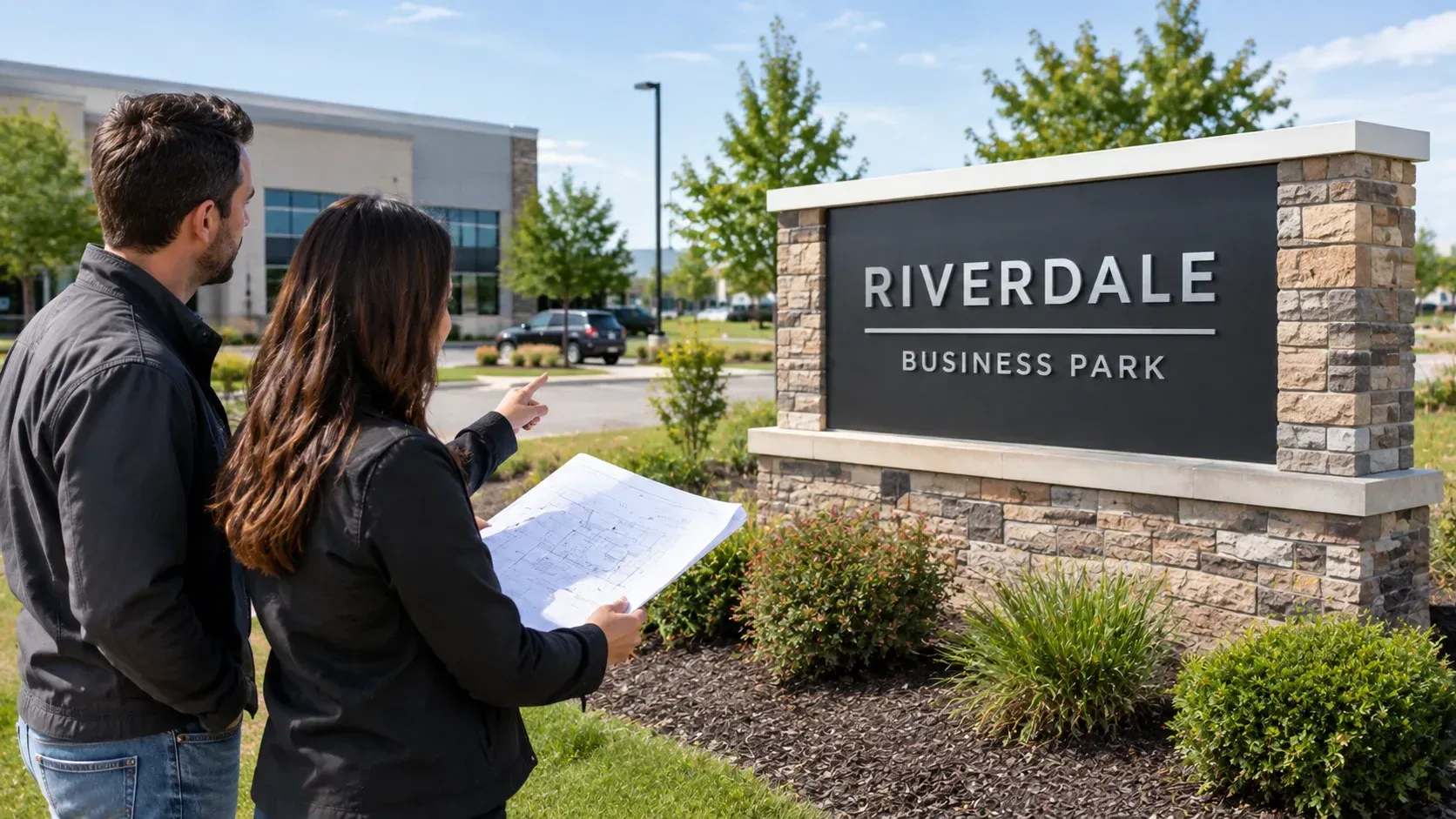
Clear sightlines are essential. Before finalizing a sign install, it is important to view the location from multiple angles and distances. This helps ensure that the sign remains visible under different conditions and at different times of day. A sign that looks perfect from one perspective may be partially hidden from another.
Aligning Sign Placement With Brand Goals

Key Takeaways
- Vinyl banners use a solid material that blocks wind, which makes them a strong pick for indoor use and short-term outdoor displays.
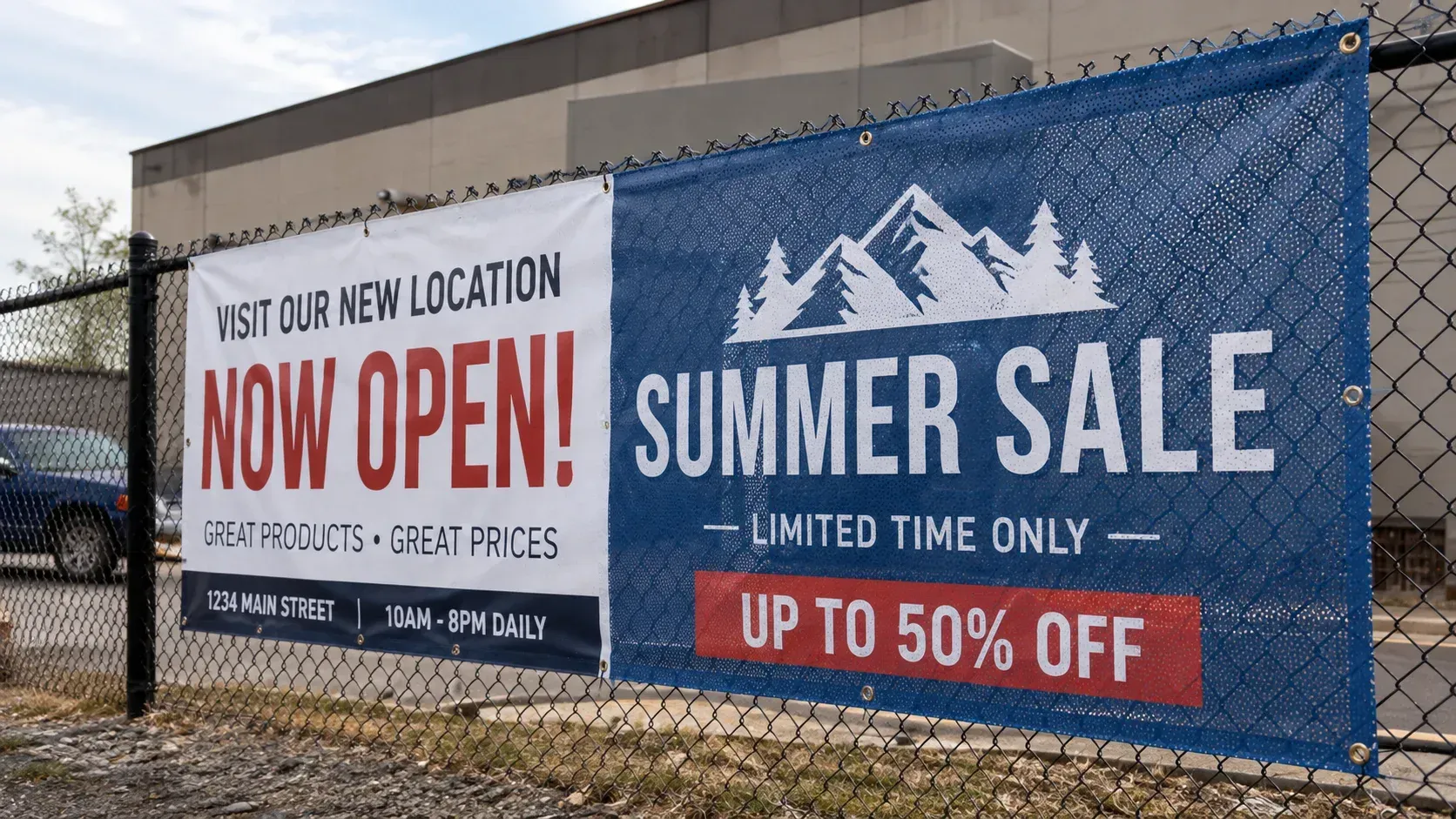
- Mesh banners have tiny holes that let wind pass through, so they hold up better in open, windy outdoor spots like fences and building fronts.
- Vinyl usually prints sharper and brighter up close, while mesh reads well from a distance but looks slightly softer near the viewer.
- The best banner material for outdoor use often depends on wind exposure, viewing distance, and how long the banner needs to last.
- Neither material is better overall. The right choice comes down to where the banner will hang and what it needs to do.
Table of Contents
- Vinyl or Mesh: The Short Answer
- What Are Vinyl and Mesh Banners?
- How Vinyl Banners Perform
- How Mesh Banners Perform
- Side-by-Side Comparison
- How to Decide Between the Two
- Common Misunderstandings
- A Realistic Example
- What Typical Advice Overlooks
- Conclusion
- Ask About Banners in Madison, WI
- Frequently Asked Questions
Vinyl or Mesh: The Short Answer
Choose a vinyl banner when your display is indoors or in a sheltered spot, since vinyl prints sharp and bright but blocks wind like a sail. Choose a mesh banner for open, windy outdoor locations, because the tiny holes in the material let air pass through and reduce strain on the banner and its mounts. If you are weighing your options for custom event and business banners, that single question about wind exposure usually points you toward the right material.
This choice matters because a banner that fights the wind can tear, sag, or pull loose from its mounts. Picking the wrong material for the location can cut a banner's life short and create safety concerns, so it is worth getting right before you order.
The good news is that the decision is usually straightforward once you know how each material behaves. The rest of this guide walks through the details so you can match the banner to your space.
What Are Vinyl and Mesh Banners?
Both vinyl and mesh banners are printed, flexible signs used for events, promotions, and outdoor advertising. The main difference is the material itself.
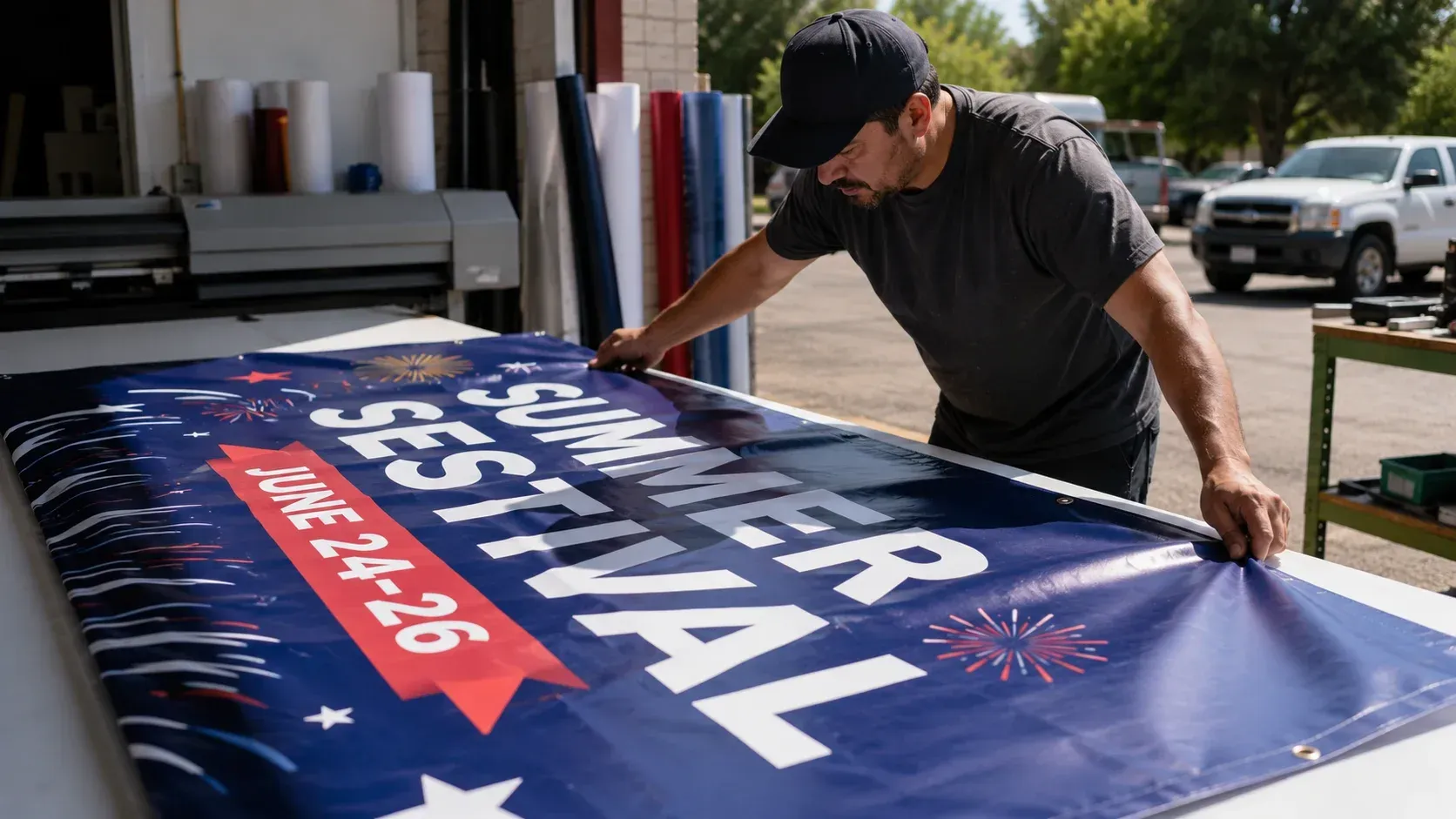
Vinyl banners are made from a solid PVC sheet. The surface is smooth and continuous, which gives you a clean, uninterrupted print area.
Mesh banners are made from a similar material, but with thousands of small perforations across the surface. Those tiny holes are what set mesh apart, since they allow air and some light to pass through.
Both fall under the broader category of custom banners, and both can be finished with hems, grommets, or pole pockets depending on how you plan to hang them.
How Vinyl Banners Perform
Direct answer: Vinyl banners deliver the sharpest, brightest print and work best indoors or in sheltered outdoor spots, but their solid surface catches wind, which limits their use in exposed, windy areas.
Because the material is solid, vinyl gives you a full, smooth canvas. Colors look vivid and fine details stay crisp, which makes vinyl a common choice for indoor events, trade shows, and storefront displays.
Vinyl is also usually the more budget-friendly option. For short-term promotions and indoor use, it often delivers the best value.
The main limitation is wind. A solid banner acts like a sail, so strong gusts put stress on the material and the mounting points. In very windy spots, a vinyl banner may need wind slits cut into it, though slits can affect the look of the design.
For most indoor and low-wind settings, vinyl is a reliable, cost-effective pick.
How Mesh Banners Perform
Direct answer: Mesh banners let wind pass through their perforated surface, which makes them well suited to open outdoor spaces like fences, scaffolding, and building fronts, though the print looks slightly softer up close.
The perforations reduce wind load, so mesh banners are less likely to tear or pull loose in gusty conditions. This makes them a strong option for long-term outdoor displays and large-format installations.
Mesh reads well from a distance, which is often how outdoor banners are viewed. From across a parking lot or road, the small holes are not noticeable and the message stays clear.
The trade-off shows up close. Because part of the surface is open, mesh print can look a little less sharp than vinyl when viewed from a few feet away. Colors can also appear slightly muted since some light passes through.
For windy, outdoor, or large-scale uses, mesh is usually the more practical material.
Side-by-Side Comparison
The table below outlines how the two materials tend to compare. Actual results depend on your design, size, and installation.

| Factor | Vinyl | Mesh |
|---|---|---|
| Wind handling | Blocks wind (sail effect) | Lets wind through |
| Best setting | Indoor, sheltered outdoor | Open, windy outdoor |
| Print sharpness | Very sharp and bright | Slightly softer up close |
| Distance readability | Strong | Strong |
| Typical durability outdoors | Shorter in high wind | Longer in exposed spots |
| Light pass-through | None | Some |
| Typical cost | Lower | Comparable or slightly higher |
| Common uses | Events, storefronts, indoor | Fences, building wraps, outdoor |
Neither column wins outright. The best fit depends on where the banner hangs and how it will be seen.
How to Decide Between the Two
There is no single right answer, so a short framework helps. Running through these points makes the choice clearer.
- Wind exposure. Open, windy spots favor mesh. Sheltered or indoor spots favor vinyl.
- Viewing distance. For close-up viewing, vinyl looks crisper. For distance viewing, mesh performs just as well.
- Display length. For long-term outdoor use, mesh often lasts longer in exposed conditions.
- Print detail. For designs with fine detail or bright, solid colors, vinyl holds an edge.
- Budget. Vinyl is often the more affordable option for short-term or indoor needs.
If your banner will hang on a fence or a large wall outdoors, mesh is usually the safer bet. If it will hang indoors or in a protected area, vinyl often gives you the best look for the price.
Common Misunderstandings
Common belief: Mesh banners always look worse than vinyl. What is actually true: Mesh looks softer only up close. At the distances most outdoor banners are viewed, the difference is hard to notice, and the wind resistance can outweigh the small drop in sharpness.
Common belief: Vinyl banners can go anywhere outdoors. What is actually true: Vinyl works outdoors, but in high-wind spots the solid surface can tear or strain its mounts. Location matters more than the material's general durability.
Common belief: Adding wind slits solves every wind problem with vinyl. What is actually true: Slits reduce wind load, but they cut into the design and are not a full substitute for mesh in consistently windy areas. They are a compromise, not a cure-all.
A Realistic Example
Consider a hypothetical hardware store in Madison planning a large banner along a chain-link fence facing an open lot. The spot gets steady wind, and drivers will read the banner from the road as they pass.
In this case, mesh is the practical choice. The perforations would handle the wind, the fence mounting would stay secure, and the distance viewing would hide any softness in the print.
Now picture a different setup, a banner hung inside a community hall for a weekend event. Here, vinyl makes more sense. There is no wind to worry about, guests will view it up close, and the sharp, bright print would show the design at its best.
Same product, two settings, two different recommendations. The location and viewing conditions drive the decision more than the material alone.
What Typical Advice Overlooks
Most quick comparisons stop at "vinyl is sharper, mesh handles wind." A few practical points get left out, and they can shape how well your banner works over time.
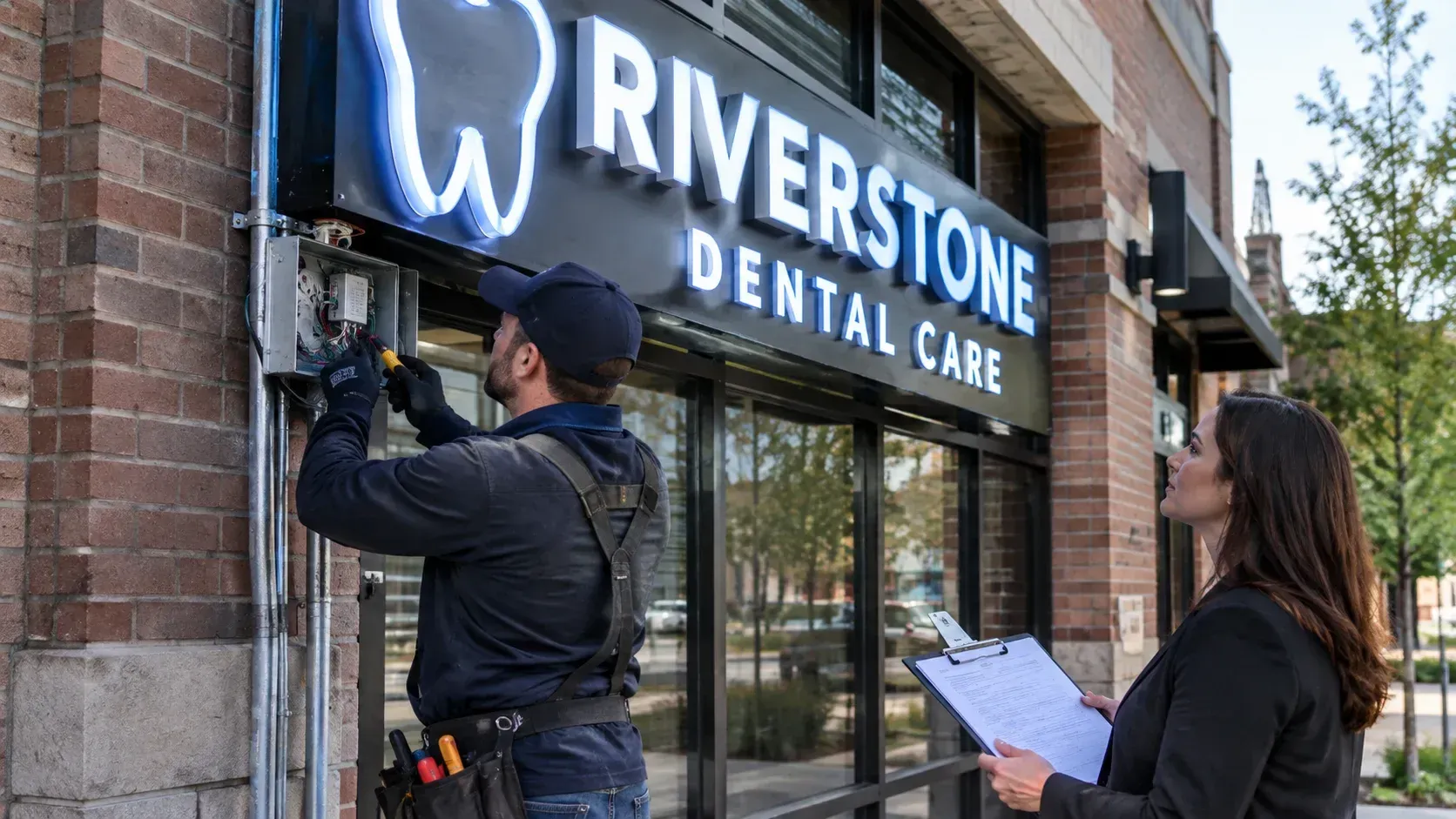
- Mounting matters as much as material. Even the right banner can fail if it is hung poorly. Secure grommets, sturdy anchor points, and even tension all affect how long a banner lasts. Professional banner installation helps here, especially for large outdoor displays.
- Wisconsin weather is a factor. Madison sees wind, rain, snow, and temperature swings. Outdoor banners face more stress here than in mild climates, which raises the value of wind-friendly mesh in exposed spots.
- Permits and placement. Where and how you hang a banner may be regulated locally. The U.S. Small Business Administration offers general guidance on permits and licenses that can point you toward the right local offices before you install.
- Lifespan expectations. A banner meant for one weekend has different needs than one meant to hang for months. Matching the material to the display length avoids paying for more than you need or replacing a banner too soon.
- Design choices interact with material. Fine text and subtle gradients show best on vinyl. If your design leans on those details but must hang in wind, you may need to rethink either the material or the layout.
None of these should steer you away from either option. They are simply worth weighing alongside the look and the price.
Conclusion
The choice between vinyl and mesh banners comes down to wind and setting. Vinyl offers the sharpest, brightest print and suits indoor or sheltered displays, while mesh lets wind pass through and holds up better in open, exposed outdoor spots.
Neither material is better in every case. Vinyl wins on close-up print quality and cost, while mesh wins on wind resistance and long-term outdoor durability.
Your location, viewing distance, display length, and design together point toward the better fit. Weighing those factors first leads to a banner that does its job without early wear or wind damage.
Ask About Banners in Madison, WI
If you are deciding between vinyl and mesh banners for your Madison, WI business or event, a short conversation can help you sort through the options. You can contact us to share where the banner will hang, how long it needs to last, and what your design looks like, then get a clearer sense of which material fits.
There is no pressure and no obligation. The goal is simply to give you the information you need to make an informed choice. Browsing a project sign gallery can also help you picture how each option looks in real settings.
Frequently Asked Questions
1. What is the best banner material for outdoor use?
It depends on wind exposure. Mesh is often best for open, windy outdoor spots because it lets air through, while vinyl works well in sheltered outdoor areas and for shorter displays.
2. Do mesh banners look blurry?
Not from a distance. Mesh can look slightly softer up close due to its tiny holes, but at normal outdoor viewing distances the print reads clearly.
3. Can I use a vinyl banner outdoors?
Yes, especially in sheltered spots or for short-term use. In very windy areas, a solid vinyl banner can strain its mounts, so mesh may be the safer choice.
4. Are mesh banners more expensive than vinyl?
They are often comparable, though mesh can cost slightly more. Pricing depends on size, finishing, and quantity more than material alone.
5. Which banner lasts longer outdoors?
In windy, exposed spots, mesh usually lasts longer because it handles wind better. In calm or sheltered areas, both materials can hold up well with proper mounting.