Introduction
A sign maintenance contract usually bundles scheduled inspections, lighting repairs, cleaning and some defined response when something fails, but coverage varies enough between providers that the document matters far more than the label on it, which is also why
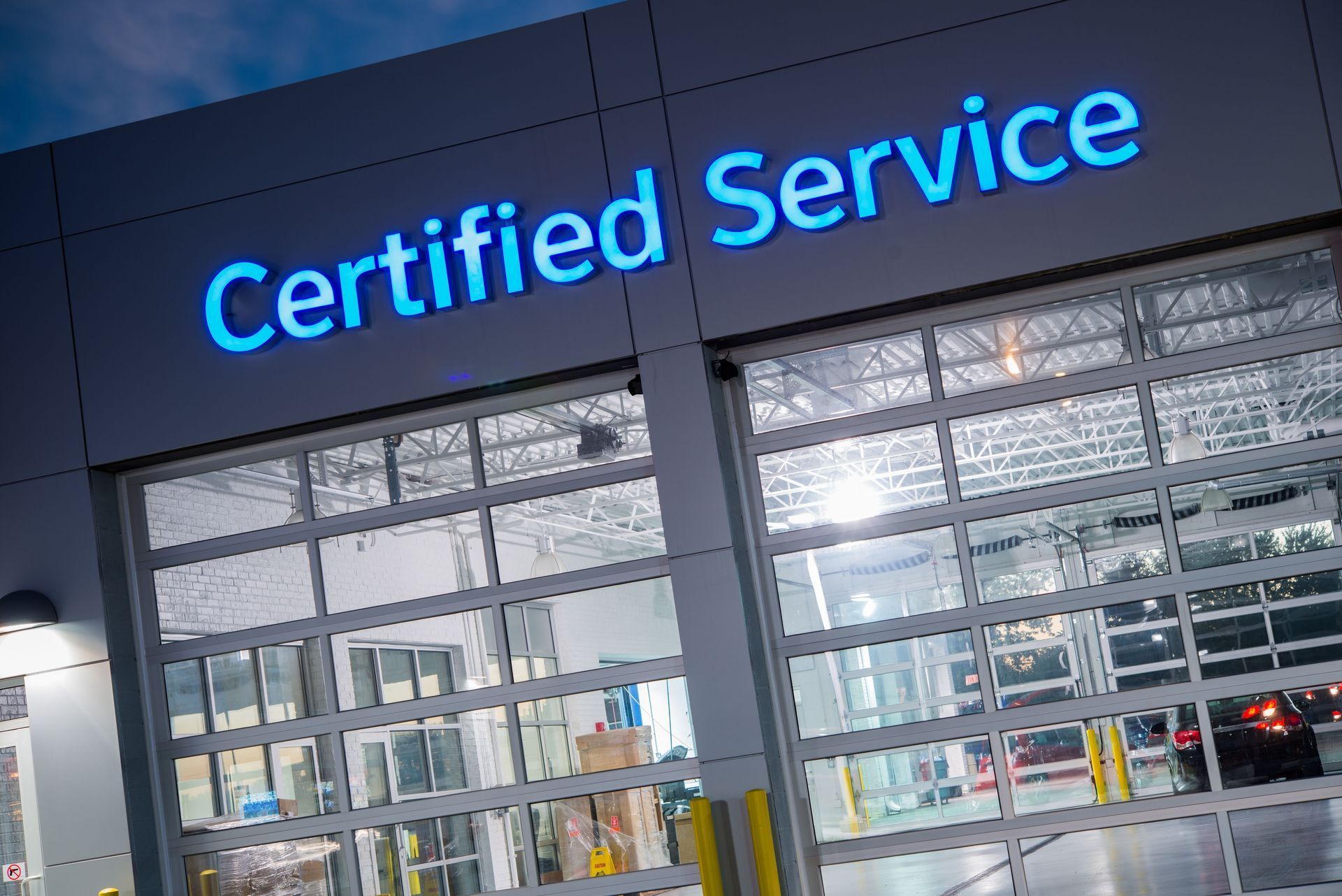
illuminated signs
cost so much more to keep running than a painted panel ever will.
So rather than describe one company's plan, here is what these agreements generally contain, what they leave out, and the questions that tell you which kind you are being offered.
What a Sign Maintenance Contract Usually Covers
Six things turn up in most of them, in some combination.
- Scheduled inspections at an agreed frequency, which is the backbone of the whole arrangement
- Lighting maintenance: LED module replacement, power supplies, and on older cabinets lamp and ballast work or neon transformer repairs
- Cleaning of faces, cabinets and returns, which matters more than people think for a lit sign
- Minor repairs: resecuring a loose face, replacing fasteners, resealing where water is getting in
- Priority response when something fails between visits
- Documentation, meaning a written report after each visit
That last one gets overlooked until you need it. If you are a tenant reporting to a landlord, a franchisee reporting to a brand, or a facilities manager reporting to anybody, a dated service record is the thing that proves the sign was maintained rather than neglected.
Coverage genuinely varies. Treat the list above as a map of the territory rather than a description of any particular agreement. The sign maintenance contract in front of you is the only authority on what it actually covers.
Scheduled Inspections Are the Part That Earns Its Keep
Because signs fail gradually, and gradually is invisible from the sidewalk.
A yearly inspection is a reasonable baseline for exterior signs. What it catches, while the catching is still cheap:
- A single dark LED module, which looks like nothing at thirty miles an hour but usually means a power supply is working harder than it should be
- Water getting into a cabinet, which is the beginning of most electrical failures rather than a separate problem
- Loose fasteners and brackets, before a face lets go in a wind
- Corrosion at the mounts, which is the one that turns into a structural conversation
- Degraded gaskets and seals
- Parking lot lights out, which nobody reports because everybody assumes somebody else has
The economics are not complicated. A bracket tightened during a scheduled visit costs a fraction of a face that came down in a storm, and that is before anybody talks about what landed underneath it.
There is a softer argument too, and it is the one business owners feel.
A half-lit sign is worse than an unlit sign. A dark sign reads as closed. A sign with three letters out reads as a business that has stopped paying attention, which is a worse thing to communicate to the street than almost anything you could put on it deliberately.
What Is Almost Never Included
Knowing the exclusions tells you more about an agreement than the inclusions do.
- Vandalism and accident damage. That is an insurance claim, not maintenance.
- Storm and wind damage, same reasoning.
- Full face replacement when acrylic has yellowed, crazed or cracked past repair. Worth knowing that faces on cabinet signs can often be replaced without replacing the whole sign, but that is a job rather than a covered item.
- Permit work. If a sign is being changed rather than repaired, permitting usually comes back into play, which is a different process entirely.
- Structural work on poles, footings and foundations.
- Rebranding or message changes, which are new signage wearing maintenance clothing.
- Signs not listed on the schedule. This one catches multi-location businesses constantly. A site opens, nobody adds it to the agreement, and eighteen months later it turns out that sign was never covered.
The organizing principle: a maintenance contract keeps what you already have working. It does not replace it, upgrade it or change what it says. Replacing a tired
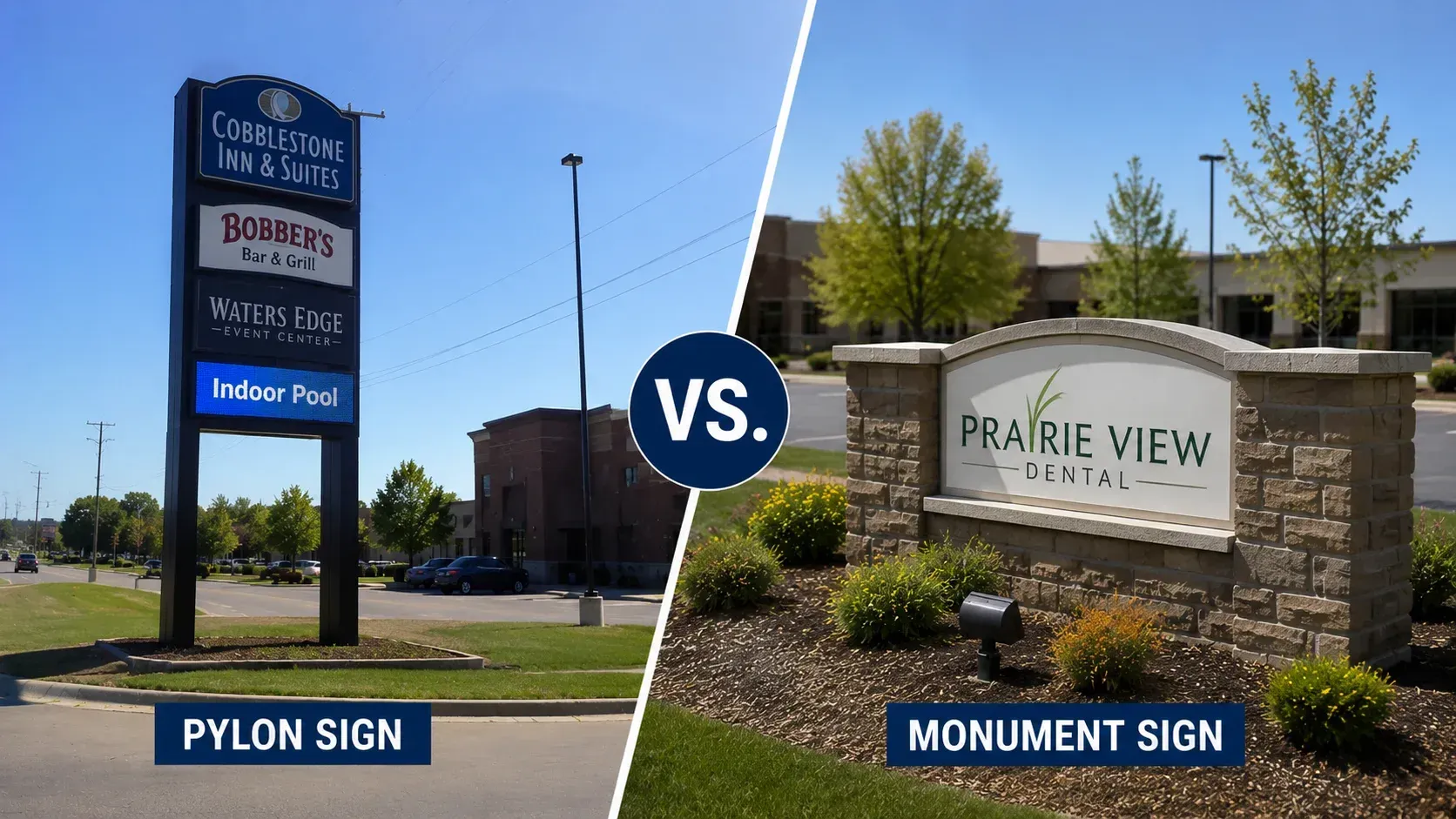
monument sign
is a project, not a service call.
Who Handles the Electrical Side
Worth asking directly, and worth us being straight about.
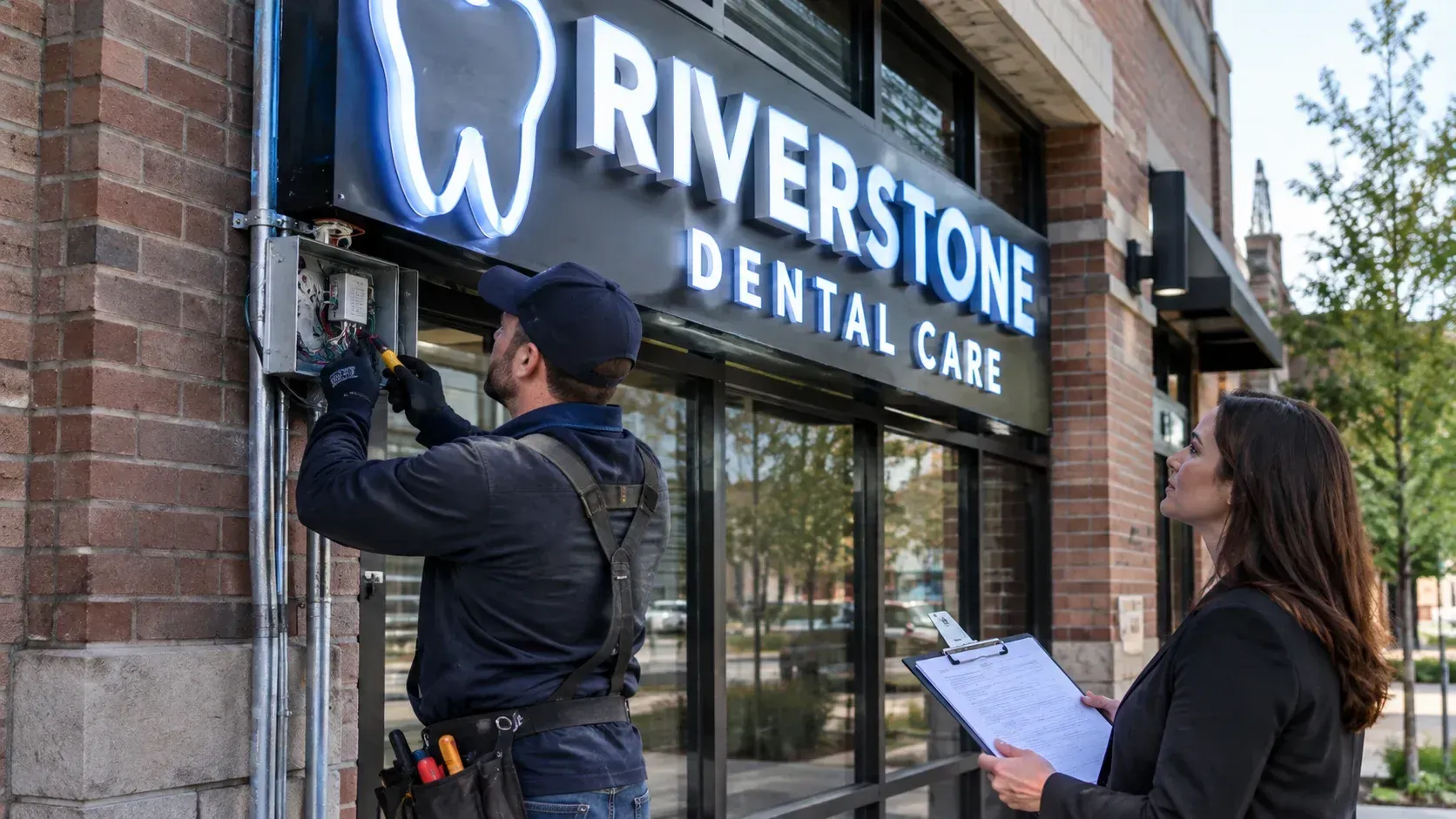
When a lit sign stops working, the cause is usually electrical. A dark section typically means failed LED modules, a bad power supply, a loose connection or a tripped circuit. Some of that sits squarely in sign servicing: modules, power supplies, connections inside the cabinet.
Some of it does not. The circuit itself, the disconnect, the feed from the panel, anything on the building side of the sign, is electrical work on the building, and that belongs to a licensed electrician.
Ask any provider where they draw that line, and ask us the same question. An agreement that is vague about it means you find out where the boundary sits during an outage, on a Friday, which is the worst possible time to be discovering who you need to call. The same boundary applies whether the sign is a cabinet, a pylon or a set of
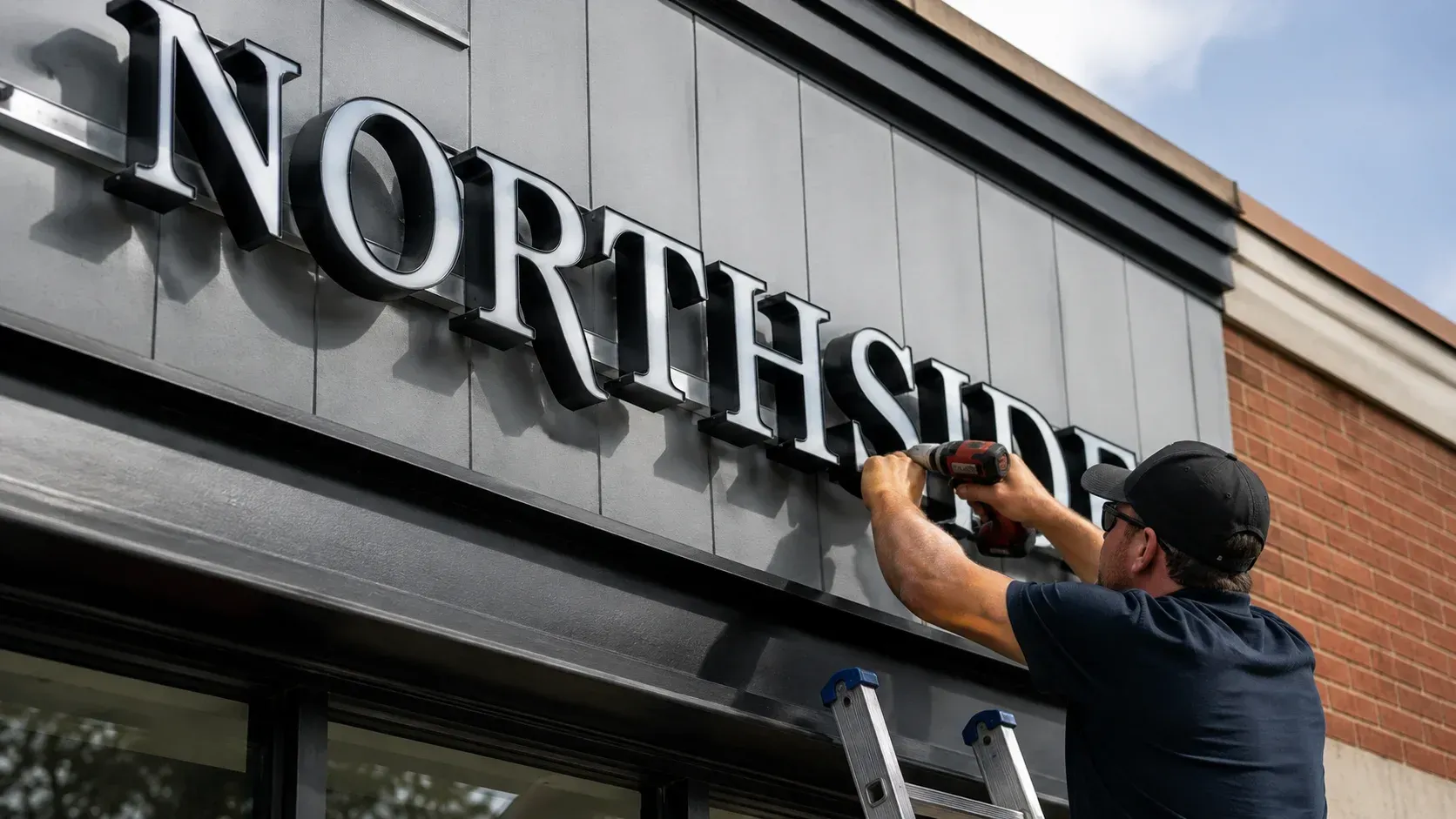
channel letters.
The Questions to Ask Before You Sign One
Ten questions. Any provider worth using will answer all of them in writing.
- What is on the schedule of covered signs, listed by location?
- How often are inspections, and what specifically gets checked?
- What is the response commitment when a sign fails, and does it differ for a dark sign versus a safety issue?
- Are parts included or billed separately? LED modules and power supplies are the ones that matter.
- Are travel and lift charges included? A tall sign needs a bucket truck, and that is a real line item.
- Who performs electrical work, and where does the boundary sit?
- What is excluded, listed out rather than implied?
- Is there a written report after each visit?
- What happens when a sign needs replacing rather than repairing?
- What are the term, renewal and cancellation provisions?
Question seven is the one that separates a real agreement from a marketing document.
When a Contract Is Not Worth It
Sometimes it is not, and you should hear that from somebody who sells sign service.
If you have one non-illuminated panel sign at ground level, you do not need an agreement. Wash it occasionally, look at it properly twice a year, and call somebody if it works loose. That is the whole maintenance program.
The case for a contract strengthens as these stack up:
- The sign is illuminated
- It is high up, or otherwise needs equipment to reach
- You have more than one location
- A brand or franchisor sets standards you have to meet
- A landlord or lease requires documented maintenance
- The sign is a significant capital item you intend to keep for years
Most businesses around
Sun Prairie and the Madison area sit somewhere in the middle of that, with one or two lit signs and no particular reporting requirement. For them the honest answer is often a scheduled inspection and pay-as-you-go repairs rather than a full agreement, and any provider who will not say that is selling rather than advising.
Conclusion
Start by writing down every sign you own and where it is, because that list is the thing every useful conversation about maintenance begins with and almost nobody has it ready. Then decide whether you need an agreement or just a number to call. Both are fine answers. If you do go for a sign maintenance contract, read the exclusions before the inclusions, and get the electrical boundary in writing. The failure mode here is never the sign that was covered. It is the one nobody put on the schedule.
Ask About Ongoing Sign Service
Tell us what signs you have and where they are, and we will tell you honestly what ongoing service would look like for them, including whether we think you need an arrangement at all. We service all signs: LED, fluorescent and neon, LED conversions, parking lot lights, cabinet face replacement and general troubleshooting, and we test the system after a repair rather than just restoring the light. Capital City Signs has been family owned and operated in Madison since 1983. See what our
sign service covers, or
call us on (608) 222-1881, email ccsigns@sbcglobal.net. We are at 4226 Neptune Court, Madison, WI 53714, serving Madison, Middleton, Sun Prairie, Verona and Fitchburg.